If you are a CEO with no AI leader on staff, a fractional chief AI officer is the right call when AI needs a standing owner, and an AI consultant is the right call when you have one decision to make. Pick wrong and your AI initiatives pile up with nobody accountable, or you pay for a strategy that nobody builds. This post compares the options, gives you a decision rule for each, and ends with the contract terms to get in writing.
The Gnar Company is a Claude Select Services Partner, and its AI strategy engagement has three parts: strategy, fluency and execution, with the same team that wrote the strategy building and deploying the first automation. Keep that in mind as you read.
The choice turns on the work itself: one decision, a standing owner, or software that has to get built. This post gives no price, because fractional CAIO fees are not standard.
What is a fractional chief AI officer?#
A fractional chief AI officer, or fractional CAIO, is an executive-level AI leader who works with your company part-time, on an interim basis or on a flexible schedule. Wipfli's guide to the role, published 29 September 2026, says the job is to help develop and execute your AI strategy. You get senior AI leadership without adding a full-time executive. Wipfli adds that the role helps organizations move beyond AI experimentation by aligning AI initiatives with business goals, identifying high-value use cases, establishing governance frameworks and guiding implementation.
Three things define the role. It is an executive seat, so the person ranks your AI initiatives and answers for how they turn out. It is part-time, so you pay for a set number of days instead of a salary. And it stands, so the same person is there next month when the board asks how AI is going. Wipfli says mid-market companies, especially, will often benefit from hiring a chief AI officer fractionally, and that the role suits organizations that lack the budget, internal expertise or immediate need for a full-time executive.
The word "fractional" says how much of the person you get. It says nothing about what they do all day. One fractional CAIO will run your AI roadmap meetings and push your department heads to make choices. Another will write memos and leave. That is why the contract at the end of this post matters more than the label.
The title also leaves out coding, connecting your ERP to a model and training your staff. Those jobs need other people. If your company has no engineers free to take direction, that gap needs an answer before you sign anyone.
Fractional CAIO, consultant or full-time hire?#
A fractional CAIO owns your AI agenda part-time and for as long as the contract runs. An AI consultant owns one defined piece of work and leaves when it is done. A full-time CAIO owns the whole agenda every day, and you pay for that seat in every month, busy or slow. The table shows what each option leaves you holding.
| Option | What it owns | What you have at the end |
|---|---|---|
| Fractional CAIO | A standing seat: your AI strategy, the order of your AI initiatives, governance, and a set number of days each month | A named leader who answers for the AI roadmap. Software only if another team builds it |
| AI consultant | One bounded piece of work, such as a readiness assessment, a vendor choice or a pilot review | A deliverable you agreed on up front. The work ends when the scope ends |
| Full-time hire | The whole AI agenda, every working day, with a budget and usually a team | A permanent hire at the executive level. You pay for the seat even in a slow month |
| An executive you already have | An internal owner, with AI added to a job that is already full | Context and continuity, with little time left over for AI |
Read the table from the last column. In none of these rows does working software appear by itself. Someone has to write the code, connect it to the systems you already run and keep it running. If the answer to "who builds it" is "we will figure that out later," you have bought a plan with no owner for the next step. Ask the question in the first meeting.
Our post on hiring an AI implementation consultant covers the builder side of this choice in more detail.
What does a fractional chief AI officer do?#
A fractional chief AI officer sets the AI strategy, decides which AI initiatives get money and in what order, sets the rules for safe use, and checks that the work is paying off. Wipfli lists seven typical responsibilities, and IBM's research describes a similar mandate for chief AI officers. Use both lists to write the scope.
Wipfli says a fractional CAIO's responsibilities typically include:
- An AI strategy and roadmap tied to business objectives
- Prioritizing the AI use cases with the most potential
- Assessing AI readiness across people, processes, data and technology
- Governance and policies for responsible, secure and compliant AI use
- Implementation oversight, including technology selection and pilots
- Building AI literacy through leadership coaching and employee education
- Measuring performance and business impact
IBM's Institute for Business Value, in a survey of more than 2,300 organizations in the first quarter of 2025, found that chief AI officers are tasked with defining AI strategy, directing AI implementation, managing AI budgets and developing change management for AI adoption.
Governance deserves a closer look. It means someone decides what staff may paste into an AI tool, how data privacy is protected and who approves a new tool. As general advice, it should also cover the build or buy call on each AI initiative.
Check each candidate's proposal against this list. A proposal that covers strategy and nothing else is a consulting engagement and falls short of the standing role the title promises.
Does the EU AI Act change the role?#
It can, because for a company it covers, the EU AI Act turns AI literacy into a duty someone has to own. A fractional CAIO is a natural owner for that work. Whether the Act covers your company is a question for counsel, so ask before you write the scope.
AI literacy has a legal angle: Article 4 of the EU AI Act, in force from 2 February 2025, says providers and deployers of AI systems must take measures to ensure, to their best extent, a sufficient level of AI literacy among their staff and the other people who operate and use AI systems for them. Someone should own that training.
When a fractional CAIO is the right call#
Hire a fractional chief AI officer when AI ideas are piling up, no one owns them, and the work will not fill a full-time job. The test is simple: can you name three AI initiatives that need one person to rank them and say no to the rest? If you can, you need a standing owner, and a one-off report will not supply one.
Here is a decision rule you can run in ten minutes. A fractional CAIO fits when most of these are true:
- Two or more business units want AI tools, and each one is buying on its own.
- A board member, a lender or a large customer keeps asking what your AI plan is.
- Nobody on your team has the job of saying which AI initiative goes first.
- You expect AI work to continue for a long stretch, so a single report would go stale.
- You cannot fill a full-time executive seat with enough real work.
- You want one person to own the AI roadmap and report to you on it.
- A vendor choice has stalled for months because no one has the authority to make it.
If only the first two are true, a consultant's plan may be enough for the board. If most of the rest are true, you need an owner.
Industry matters too. Wipfli names construction firms and manufacturing organizations among those that can get value from fractional AI leadership. Its construction example is getting the back office to organize field data, and its manufacturing examples include predictive maintenance and supply chain visibility.
A good candidate brings patterns from other companies and industries. Ask which ones, and ask for near-term wins in the first months alongside the longer AI roadmap.
Know the limit. A fractional CAIO who ranks your AI initiatives and hands you a list has done half the job. A ranked backlog with no builder is a document. The best version of this hire comes with a clear answer on who builds: an internal team, a firm you pick through a fair process, or both.
The post on how to build an AI roadmap the board will fund shows what a fractional CAIO's first deliverable should look like.
When an AI consultant is enough#
An AI consultant is enough when you have one bounded decision and the people to carry it out. Examples are a readiness assessment, a choice between two vendors, a policy draft or a review of a pilot that stalled. If the question has an end, the engagement can have one too, and you do not need to rent a standing executive.
Use a consultant when these are true:
- You can write the question in one sentence, such as "is our data ready for this use case?"
- You have an executive who will own the answer once it arrives.
- Your own engineers have the capacity and the direction to act on it.
- You want an outside view with no long-term commitment.
The last two matter most. Gnar's own answer to the objection "we have people for this" is this: "Often you should use them. If your own engineers have the capacity and the direction, do it internally and we will say so on the call." The same logic applies to AI leadership. If you already have a capable executive and engineers who are free, a consultant fills the gap, and a fractional CAIO would duplicate the person you already have.
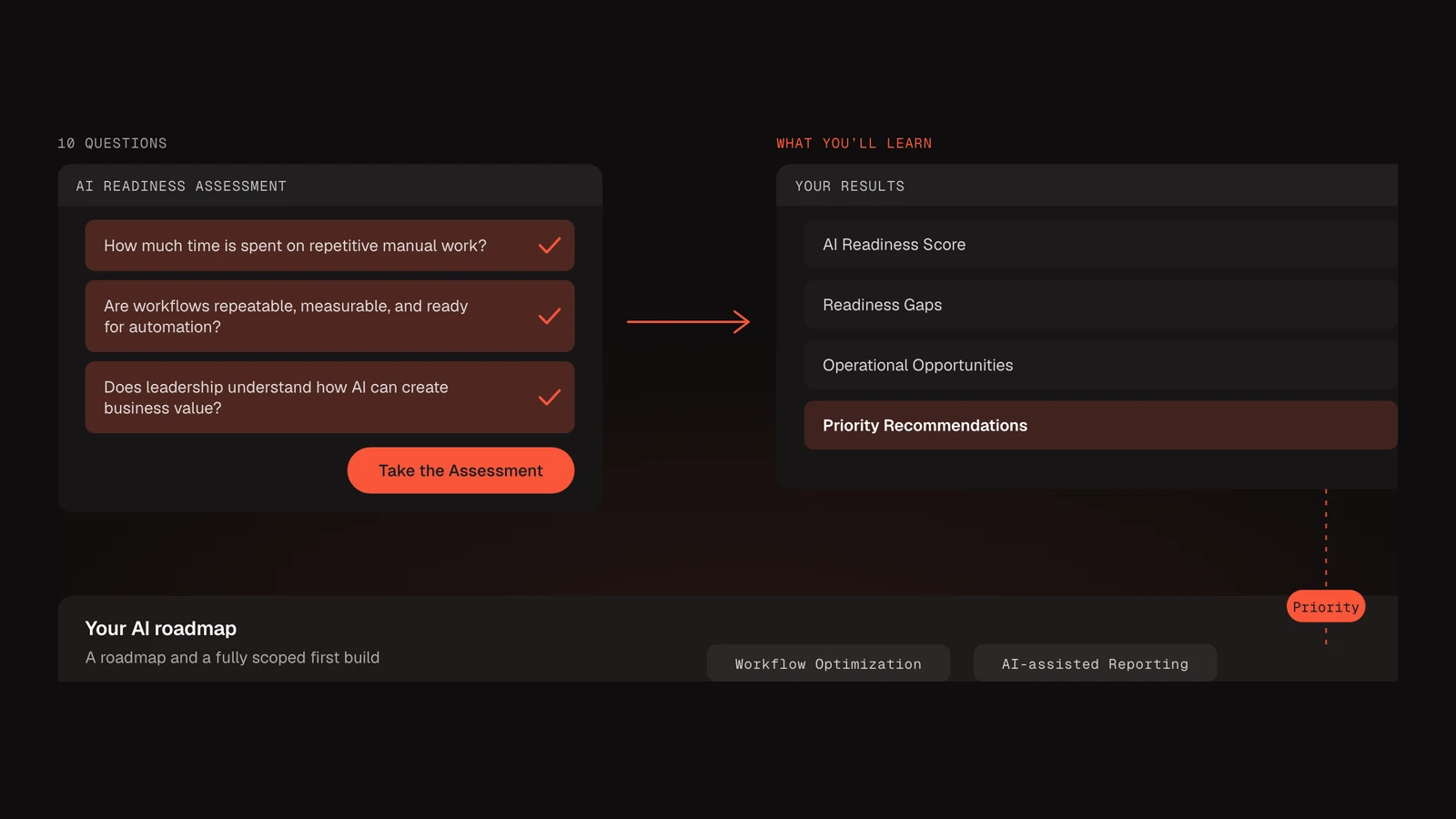
An assessment can also show that you are not ready yet because the data is scattered or the process is undocumented. That is a useful answer to get without a standing contract. Our post on what an AI readiness assessment should cover lists what a good one checks.
The free option comes first. Gnar's AI strategy page points to a free AI Readiness Assessment and a free Claude workshop as places to start before any sales conversation.
With any consultant, ask who owns the deliverable afterward and whether you can take it to another firm.
How big companies set up the role#
Large organizations set up the role as one named chief AI officer, and most of them promote that person from inside. IBM's survey found that 26% of the more than 2,300 organizations it reached say they have one, up from 11% in 2023. Of those officers, 57% were appointed from the organization's internal talent. So the common path is to promote someone you already have.
IBM's Institute for Business Value, with Oxford Economics and the Dubai Future Foundation, ran the survey in the first quarter of 2025. Two more findings are worth your attention. First, 66% of respondents expect most organizations to have a chief AI officer within the next two years. Second, organizations with a CAIO see 10% greater ROI on AI spend. IBM reports that as a survey finding. A survey cannot show that the title caused the gain, so treat it as a hint. It is no proof.
Government points the same way. The federal Office of Management and Budget issued Memorandum M-25-21 on 3 April 2025. It says agencies must identify a Chief AI Officer to champion the agency's AI goals, and it requires them to keep updating their annual AI use case inventory. An organization with a large staff and many programs decided that AI needs a named person and a running list of what is in use.
What does this mean for a company with a few hundred employees? Three things, and the last one is my reading of the numbers.
- The question has moved from "do we need an AI leader" to "who is it." Having no answer is becoming the unusual position.
- The role is a named seat. The OMB memo and the IBM survey both describe one person with a title.
- Because 57% of those officers came from inside, you have a third option besides a hire or a rental: promote an executive you trust and give that person outside help. If you take that path, protect the person's time, or the job becomes a side project. The post on who should own a Claude rollout works through the same ownership question for one tool.
These numbers describe chief AI officers as a group. Use them to see where the role is heading. Do not use them to price a fractional deal, and ask any fractional candidate to show results from their own clients.
What to put in the contract#
Put the fee, the minimum term, the days per month and the deliverables in writing before any work starts. Fractional CAIO fees are not standard, so you cannot judge an offer against a market rate. You can judge it against a clear scope. The checklist below is the one to hand to every candidate.
- Fee. The monthly fee in dollars, what it includes and what is billed on top.
- Minimum term. The shortest commitment, the notice needed to leave and what happens to unused days.
- Days per month. A number, plus how the days are split between meetings and hands-on work.
- A named person. The individual who does the work, with a rule that a substitute needs your approval.
- Decision rights. What the CAIO may approve alone, such as a pilot or a tool trial, and what needs your sign-off, such as spend above a limit.
- Deliverables with dates. An AI roadmap, a ranked list of AI initiatives, an AI use policy and a regular board summary, each with a due date. Your board will expect a clear update on AI initiatives, so make that a written deliverable.
- Who builds. How the first AI initiative gets built, who picks the team and whether you may take the plan to another firm.
- Conflicts of interest. Whether the CAIO or the CAIO's firm earns money from any tool, vendor or builder they recommend, stated in writing.
- Measures. The two or three numbers that tell you the work is paying off, and the date you will review them.
- Ownership and handover. Everything produced belongs to you, and the CAIO leaves behind documents your next leader can use.
Read the proposal for what is missing. If the deliverables are vague, ask for a draft of the first one. If the days per month are "flexible," ask for a minimum. If the proposal never says who builds, ask until you get an answer in writing. A CAIO paid by the vendors they recommend is a salesperson with a title, so get the conflict of interest answer before you sign.
Where Gnar fits#
Gnar's offer is its AI strategy engagement, and it has three parts. Strategy is a board-grade AI roadmap and a fully scoped first build. Fluency is a cohort program that takes your team from AI-curious to AI-fluent. Execution is the team that wrote the strategy shipping it. That structure answers the "who builds" question inside the engagement itself.
The strategy work is grounded in stakeholder interviews, process mapping and five-dimension opportunity scoring. The five dimensions are ROI, implementation cost, data readiness, reasoning risk and behavior-change cost. Each idea is scored on all five.
For Counter Culture Coffee, a roaster that runs on NetSuite, The Gnar Company found 79 AI and automation opportunities. The team ran 15+ interviews and mapped more than 60 tools. The number to notice is the first one. A company with that many ideas needs a way to rank them and a team to build the winners, which is the problem this post started with.
Gnar writes for a specific reader: "For the executive who owns the number and does not own the engineers." If that is you, you have the budget and the accountability, and you have no engineering team to point at AI. That is the situation where a plan without a builder stalls, and where the build step needs its own answer. The page says plainly that the work ships: "The point is that something real runs at the end, not that a deck gets delivered."
Gnar also publishes the price of its Discovery and Design engagement: $20,000 for four weeks or $30,000 for six weeks. It ends with a build plan that has a fixed price on it. You can read the details on the Discovery page. I am naming its published price so you have one real number to compare against.
If you are weighing a fractional CAIO, use the checklist above on every offer, including ours. Then ask the one question the others skip: when the strategy is done, who builds the first AI initiative, and can you see their work before you sign?