The best AI-native consulting firm for a CIO who needs working software is one whose own website says it builds and runs the system, and who can show you a system it built that is still running. We compared six firms that sell AI work and say on their own sites what they build: The Gnar Company, BCG X, QuantumBlack, Thoughtworks, AE Studio and Alice Labs.
We are The Gnar Company, so one entry is ours. Our entry uses only facts we publish. Every other entry quotes that firm's own website as it read on November 14, 2026, and links to the page. Nobody on the list is ranked, including us.
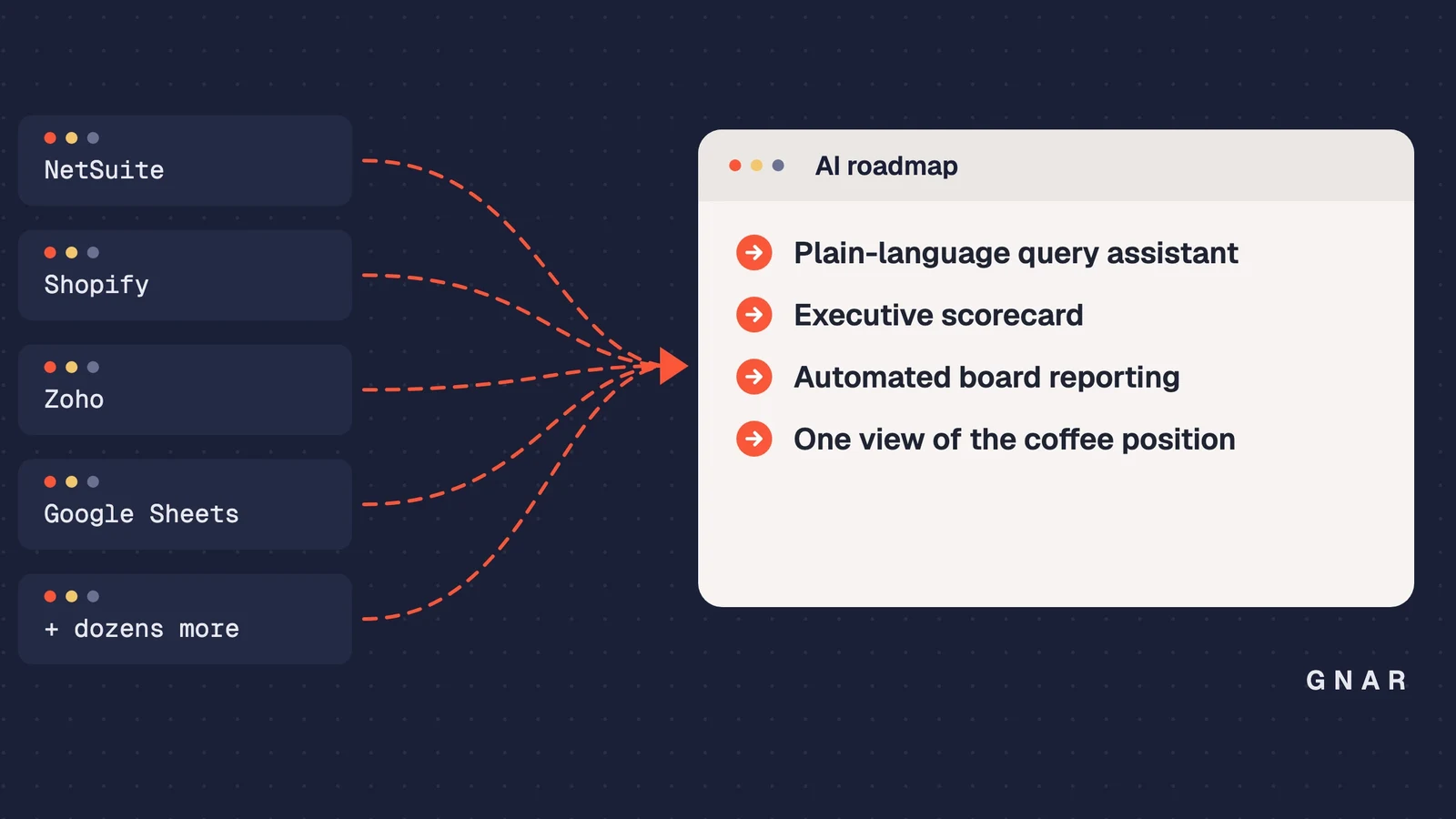
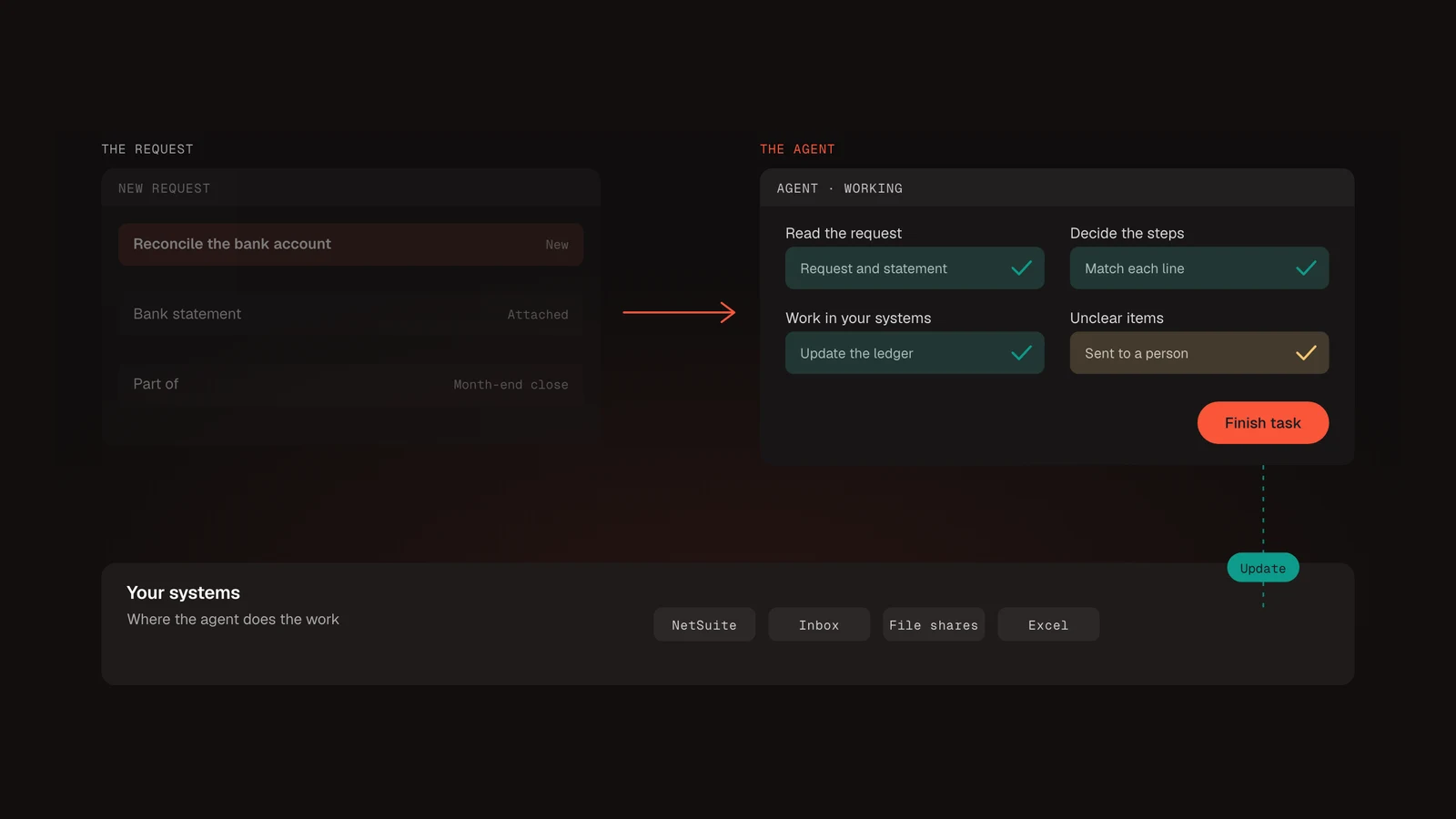
The Gnar Company is a Claude Select Services Partner, and its enterprise AI integration work connects an AI model, such as Claude, to the systems a company already runs, such as its ERP, its CRM and its databases. On Gnar's AI strategy page, the same team that wrote the strategy builds and deploys the first automation.
This list is for a CIO or COO at a mid-market company where software runs the business but is not the product. Think of a distributor, a manufacturer, an insurer or a logistics firm. The choice in front of you is between a firm that sells a plan and a firm that puts software into production.
Which AI-native consulting firms build and ship the software?#
The table quotes what each firm's own site says it builds: client software for BCG X, Thoughtworks, AE Studio, Alice Labs and The Gnar Company, and tools and assets built in its Labs for QuantumBlack. The last column shows what each site says about its team or clients.
| Firm | What its site says it builds | What its site says about team or clients |
|---|---|---|
| The Gnar Company | AI strategy with a fully scoped first build, then the first automation, built by the team that wrote the strategy | A small team of senior US-based engineers and a product manager |
| BCG X | The tech build and design unit of BCG; builds, maintains and scales client solutions | 3,000+ tech builders, designers and entrepreneurs |
| QuantumBlack | A lab where technologists, designers and product managers build tools and assets | The AI consulting arm of McKinsey |
| Thoughtworks | Production grade agents built on its AI/works platform and governed by Agent/works | Médecins Sans Frontières' Antibiogo AI app, scaled across 100+ global labs |
| AE Studio | AI-native product builds, custom ML models and agentic automations | 150 senior professionals, bootstrapped since 2016 |
| Alice Labs | Its page says "The people who scope the work also build it" | Nordic and European organizations, from a Swedish company |
What does "AI-native" mean when you hire a consulting firm?#
"AI-native" is a label firms use for different things, so check three facts you can verify instead: who writes the code, what is running when the first phase ends, and who runs the system after launch.
Even one site can use the phrase two ways. AE Studio's homepage uses it for products it builds ("AI-native product builds") and for a team it deploys ("One AI-native team, deployed across your portfolio"). Neither use tells you whether a firm will put a working system into your environment.
So set the label aside and use a simple rule. A firm that answers all three questions with names, systems and accounts is a builder. A firm that answers with a document, with no fixed price for the build and no named running system, is selling a plan. A plan can be worth buying, but you should know which one you are paying for before you sign.
Strategy firms with a technology unit: BCG X and QuantumBlack#
BCG X and QuantumBlack sit inside two strategy firms, BCG and McKinsey. BCG X calls itself the tech build and design unit of BCG, and QuantumBlack calls itself the AI consulting arm of McKinsey. For both, the question is who builds your system, and who runs it once the strategy team has moved on.
BCG X#
BCG X says it is "the tech build and design unit of BCG." Its site says it "unites 3,000+ tech builders, designers, and entrepreneurs." Its delivery group says, "We build, maintain, and scale client solutions." Its AI and GenAI group says it helps clients "deploy solutions at scale."
Ask them: which people from the build team will work on your system, and whether the delivery group or your team runs it after launch.
QuantumBlack, AI by McKinsey#
QuantumBlack calls itself "the AI consulting arm of McKinsey." Its page describes QuantumBlack Labs as a center where technologists, designers and product managers build tools and assets.
Ask them: whether the engagement includes building and running your system, or ends with a handoff to another firm.
An engineering firm with its own AI platforms: Thoughtworks#
Thoughtworks sells its AI work on top of two platforms of its own. Its enterprise AI page names AI/works as its agentic development platform and Agent/works as its AI agent governance platform. It says the pair helps clients "move safely from proof-of-concept to production-ready AI."
Thoughtworks' enterprise AI page lists services that include AI strategy and agentic AI. Under agentic AI, it offers "production-grade agents built on AI/works and governed by Agent/works." Its AI/works technical guide describes a runtime operations layer that "detects change, updates the Super Spec, and regenerates impacted code." The Super Spec is Thoughtworks' name for an AI-generated specification that can be refreshed as requirements change.
Ask them: what you keep if you stop using AI/works, and whether the code and the specification stay in your own accounts.
AI specialist firms: AE Studio and Alice Labs#
AE Studio and Alice Labs are AI specialists: every service on the pages we read is an AI service. AE Studio pairs alignment research with production AI work for clients. Alice Labs lists AI strategy, implementation, training and operations as its services.
AE Studio#
AE Studio says it does "frontier alignment research and production AI work under one roof." It describes itself as "Bootstrapped since 2016, no outside investors, 150 senior professionals." It sells AI-native product builds, custom ML models and agentic automations. For mid-market companies, its site says: "We pilot for a quarter, then scale what works."
Ask them: what a pilot leaves running in your systems, and who owns it if you stop after the pilot.
Alice Labs#
Alice Labs describes itself as a "Global AI implementation consultancy." Its service headings are AI Strategy, AI Implementation, AI Training and AI Operations. Its page says, "The people who scope the work also build it," and "Founders code alongside clients." It is a registered Swedish company. Its headline says it helps "Nordic and European organizations move from AI pilots to AI in production."
Ask them: how "remote by default, on site when the work needs it" covers a US workday, and where your system runs once it is live.
A custom software firm: The Gnar Company#
The Gnar Company builds custom software and connects AI to the systems a company already runs. Gnar describes its work as custom software built around how your operation actually works, from a firm that will tell you when not to build it. On its AI strategy page, the strategy work produces a strategy, a roadmap and a fully scoped first build.
That page then says the same team that wrote the strategy builds and deploys the first automation. Gnar's AI Strategy and Fluency page puts it this way: "Most AI strategy stops at a slide deck. Ours ends with a roadmap your team can run and an automation running in your environment, not a PDF that gets archived."
The team is "a small team of senior US-based engineers and a product manager," with "No offshore teams, no junior developers staffed on after a senior pitch." Gnar is rated 4.8 on Clutch. On its case studies page, Gnar says it delivered the Massachusetts Disabled Persons Protection Commission's Abuser Registry in July 2023 and still maintains it.
On integration work, Gnar connects AI to an ERP or CRM mostly through MCP servers. Each one is a small program that lets AI use one system, only in the ways you allow. MCP, the Model Context Protocol, is an open source standard for connecting AI applications to external systems. A read-only MCP server lets the AI find an order or a customer, and the AI cannot change anything through it. When the AI may make changes, every change passes one checkpoint you control, and a person can approve it before it lands.
Ask us: when you should not build at all.
How can you tell a plan-only firm from a firm that ships?#
Ask each firm for evidence you can check in writing before you sign. Seven checks separate the two: named engineers, a running system in a named case, a first phase that ends in software or a fixed-price build plan, your accounts, your code, a plan for after launch, and an honest answer about when not to hire the firm. These are general engineering advice, written for this list:
- Named engineers. Ask who will write the code, by name, and whether those people were on the sales call. Put the names in the statement of work.
- A running system in a named case. Ask for a case study with the client's name on it, where software the firm built is still in use. A count of pilots is a different thing.
- A first phase that ends in software or a fixed-price build plan. Read the list of deliverables in the proposal. If every item is a document with no fixed price for the build, the firm is selling a plan.
- Your accounts. Ask whether the system will run in your own cloud account or in the firm's.
- Your code. Ask for access to the code repository from the start, and who owns the code at the end.
- A plan for after launch. Ask who watches the system, who fixes it when it breaks, and what that costs per month.
- When not to hire them. Ask when you should not hire the firm, and listen for a real answer.
Send the same seven questions to every firm on your short list, ours included, and compare the answers side by side.
What should the first engagement leave running?#
A first phase should leave at least one thing running in your environment, or end in a build plan with a fixed price. Ask which one you are buying. A first engagement that only produces a deck may leave you with a plan, no price and nothing running. The table compares what each kind of first phase hands over. It is general engineering advice. It does not describe any one firm's contract.
| Item | First phase that ends in a deck | First phase from a firm that ships |
|---|---|---|
| Use cases | A ranked list | A ranked list, with the first one scoped to build |
| Data | A note that data quality matters | A check of the systems the first build reads from, and what must be fixed first |
| Access | Not covered | What the AI may see and change in each system, and who signs off |
| Software | None | A first automation or connector running in your environment, or a build plan with a fixed price |
| Code | None | If code is built: a repository in your own account |
| After launch | A suggestion to hire someone | A named owner, your team or the firm's, with a monthly cost |
For a software build, Gnar's integration page names the first step: "Start with Gnar Discovery and Design, from two weeks and $15,000. You leave with a build plan that has a fixed price on it." The Discovery page says you get that plan whether or not you build with The Gnar Company.
What does AI work in a client's own code look like?#
At GSC Enterprises, Gnar's work happened in the client's own production code, with no training repositories. Gnar ran a mentor-led Immerse cohort for the five engineers at GSC, the wholesale distributor behind Grocery Supply Company. It was a training engagement. It shows the evidence to ask any firm for: changes merged in your own codebase.
GSC's engineers support a custom-built ERP on Node.js and AWS, integrations with LANSA on IBM i and DB2, and analytics in Snowflake. CIO Barrett Williams wanted "not a course, but hands-on mentoring applied to the work already on the board." During the cohort, MCP connectors for Snowflake, Atlassian, Microsoft 365 and GitHub brought GSC's real systems into the loop for engineers using Claude Code.
The case study's clearest external signal came from a tool nobody touched. GSC runs an independent code review agent on every pull request. The share of pull requests it commented on fell from roughly 100% to less than 10%, and the tool did not change. Each engineer left with a merged change in their own codebase, a maintained context file, at least one reusable skill and a workflow they can describe.
The GSC Enterprises case study proves work inside a client's real code and systems. It does not prove an AI build, because GSC did not hire Gnar to build one. For build evidence, ask every firm on your list, including us, for a named case where software it built is still in use.
Who runs the AI after launch?#
Decide who runs the AI system after launch before you sign anything with a firm. The choices are your own team, the firm that built it, or a third firm.
Several of the six firms say on their sites how they handle the work after launch:
- BCG X. Its delivery group says, "We build, maintain, and scale client solutions."
- Thoughtworks. AI/works includes runtime operations, which it calls an "AI-driven operations environment for continuous monitoring and maintenance."
- Alice Labs. It lists AI operations: "Evaluation frameworks, observability, drift monitoring, model governance for AI systems running in production."
- The Gnar Company. Gnar hands the work over documented, with the code in your own account. Your engineers can run it, or Gnar keeps it running on Maintain, its monthly support plan, from $1,000 a month.
If your own team will run it, put the handover in the statement of work: the documents, the access, the code and a named contact for questions. If the firm will run it, put the monthly price and what it covers in writing.
What do these firms charge?#
Two of the six publish prices on their own pages we read: Alice Labs and The Gnar Company. Alice Labs lists an indicative day rate of $1,200 to $2,000 USD in its own comparison article, and a typical engagement of $50,000 to $500,000. Gnar publishes Discovery at $15,000, $20,000 and $30,000 for two, four and six weeks.
| Firm | Price on the pages we read |
|---|---|
| The Gnar Company | Discovery at $15,000, $20,000 or $30,000 for two, four or six weeks. Builds typically $150K to $300K+. Maintain from $1,000 a month. The AI strategy page lists no price. |
| Alice Labs | Indicative day rate of $1,200 to $2,000 USD. Typical engagement of $50,000 to $500,000. |
| BCG X, QuantumBlack, Thoughtworks, AE Studio | No price on its own pages we read. |
A day rate is not a project price, because the number of days decides the total. Ask every firm for the first phase as a fixed price in writing, and ask what it does not include.
When should you not hire an AI consulting firm?#
Do not hire a firm when your own engineers have the capacity and the direction to do the work. If your own engineers have the capacity and the direction, do it internally and we will say so on the call.
A firm earns its fee when nobody inside can be pointed at the work. Gnar's integration page says: "This work is for companies with no engineering capacity of their own to point at this." If your engineers already have AI tools but no shared way of using them, training on your own code may be the next step, as it was at GSC. If they do not have the time or the experience, hire a firm that will build the first system and show you who runs it after.