A mid-market company should compare US custom software development firms on the terms it can check before it calls. Our short list is The Gnar Company, Atomic Object, Clean Coders Studio, Keyhole Software, 7T, MojoTech, 8th Light and Truefit. This post compares them on four terms, using what each firm's own website says, including where it says nothing, checked on November 11, 2026.
The Gnar Company wrote this list, and we are one of the eight firms on it. Read our rows knowing who wrote them. Every fact about another firm comes from that firm's own site.
The Gnar Company publishes its terms. Three commitments on every build engagement: a fixed milestone price with any overage on us, a guaranteed outcome meaning the software works as specified or we fix it, and a twelve-month bug-free warranty. It covers Discovery, Build, Forge and Maintain. It does not cover Embed. On Compass, Immerse and Integrate, ask us. Gnar builds custom software for companies that run on software nobody inside can change.
This list is written for the COO of a mid-market US company. Think of a distributor, a manufacturer, an insurer or a logistics firm, where the order system or the scheduling tool is the thing the team works around every day.
What should a mid-market company compare between software firms?#
Compare four terms that you can check on each firm's own website before the first call: who pays when a build runs over, what happens after launch, where the team works and what the firm publishes about price. Together they shape who carries the risk.
- Who pays when the build runs over. The pricing model decides whether an overage lands on you or on the firm.
- What happens after launch. A promise to fix bugs, a support plan, or nothing written down.
- Where the team works. US-based, mixed, or offshore.
- What the firm publishes about price. A published number gives you a reference point to check a proposal against.
Gnar publishes all four: the fixed milestone price, the twelve-month bug-free warranty, a US-based team and its Gnar Discovery and Design prices.
Who pays when the build runs over?#
The pricing model decides who pays, and only some firms say on their sites who carries an overage. On time and materials you pay for every extra hour. Gnar's guarantee is "a fixed milestone price with any overage on us." Clean Coders Studio says you pay the estimate even if the work takes longer. Here is what each firm says.
| Firm | What its site says about pricing |
|---|---|
| The Gnar Company | A fixed milestone price with any overage on us |
| Atomic Object | "Atomic always uses Fixed-Budget, Scope-Controlled (FBSC) engagements" |
| Clean Coders Studio | "You pay the estimate, even if the work takes longer than expected" |
| 7T | "In 90% of our engagements, we provide exact investment costs upfront after thorough requirements gathering" |
| Keyhole Software | A statement of work for fixed-scope projects, and time and materials, which it says it typically blends |
| MojoTech | Says it "believes in transparent and upfront pricing," with no model stated |
| 8th Light | Not stated on the pages we read |
| Truefit | Not stated on the pages we read |
Atomic Object names its model Fixed-Budget, Scope-Controlled. Ask each firm what happens to your price and to your scope if the work takes longer than planned.
What happens after launch?#
Gnar gives a twelve-month bug-free warranty on every build engagement, and Clean Coders Studio fixes bugs its engineers introduced at no cost, with no length stated. Four of the eight firms state after-launch terms on the pages we read.
| Firm | What its site says about after launch |
|---|---|
| The Gnar Company | A twelve-month bug-free warranty on every build engagement. Maintain starts at $1,000 a month for hosting, monitoring and support |
| Clean Coders Studio | "If a bug we introduced reaches production, we fix it at no cost to you." It calls this "a contractual commitment." No length is stated |
| Atomic Object | Optional ongoing support, from additional feature development to continuous improvement engagements |
| 7T | Post-development support services, including bug resolution |
| Keyhole Software, MojoTech, 8th Light, Truefit | Not stated on the pages we read |
Clean Coders Studio's promise page limits the promise to bugs its own engineers introduced. Ask any firm the same three questions: what counts as a bug, how long the promise lasts, and who decides whether a problem is a bug or a new request.
Gnar's Maintain plan covers hosting, monitoring, support and a standing relationship with the person who built your app, starting at $1,000 a month.
Where does the team work?#
Four firms on this list say their teams are US-based, and four describe teams that include people outside the US or do not say. This matters most when your project needs daily questions answered by people who know your operation.
| Firm | Where its site says the team works |
|---|---|
| The Gnar Company | Senior US-based engineers, with no offshore teams |
| Atomic Object | "Atomic only hires in our four U.S. regions, and we don't offshore your project team" |
| Keyhole Software | Headquartered in Kansas City; "Every Keyhole consultant is a full-time employee based in the United States" |
| Clean Coders Studio | Headquartered in Scottsdale, Arizona; "Our craftsmen work from across the United States" |
| 7T | Dallas-based architects and business analysts, with a development team in India |
| MojoTech | Offices in Providence, Boulder, New York and Buenos Aires |
| 8th Light | Headquartered in Chicago, with 140+ team members and locations that include London |
| Truefit | Headquartered in Pittsburgh; a "senior-led, virtually embedded model" |
Keyhole Software is explicit that its consultants are employees, which tells you the people on your project are not subcontracted. 7T is equally plain about its model: architects in Dallas who work with you, and a development team in India who build.
Decide how much daily back-and-forth your project needs with the people who know your operation. Then ask each firm where every person on your project will sit.
Which firms publish a price?#
Gnar and Atomic Object publish numbers on their sites, and the others list no price on the pages we read. MojoTech says it believes in "transparent and upfront pricing." It lists no number on the pages we read.
| Firm | What its site publishes |
|---|---|
| The Gnar Company | Discovery: $15,000 for two weeks, $20,000 for four weeks, $30,000 for six weeks. A build is typically $150K to $300K+. Maintain from $1,000 a month |
| Atomic Object | "Atomic's projects usually run 3-18+ months, with a budget of $50k to over $1 million" |
| Clean Coders Studio, Keyhole Software, 7T, MojoTech, 8th Light, Truefit | No price on the pages we read |
A published range helps before the first call. It tells you whether a firm builds at your size. Gnar's Discovery is the fixed-price phase that scopes a build and ends with a price for it, so you know what the build costs before you commit to it.
What the free code audit changed at First Line Technology#
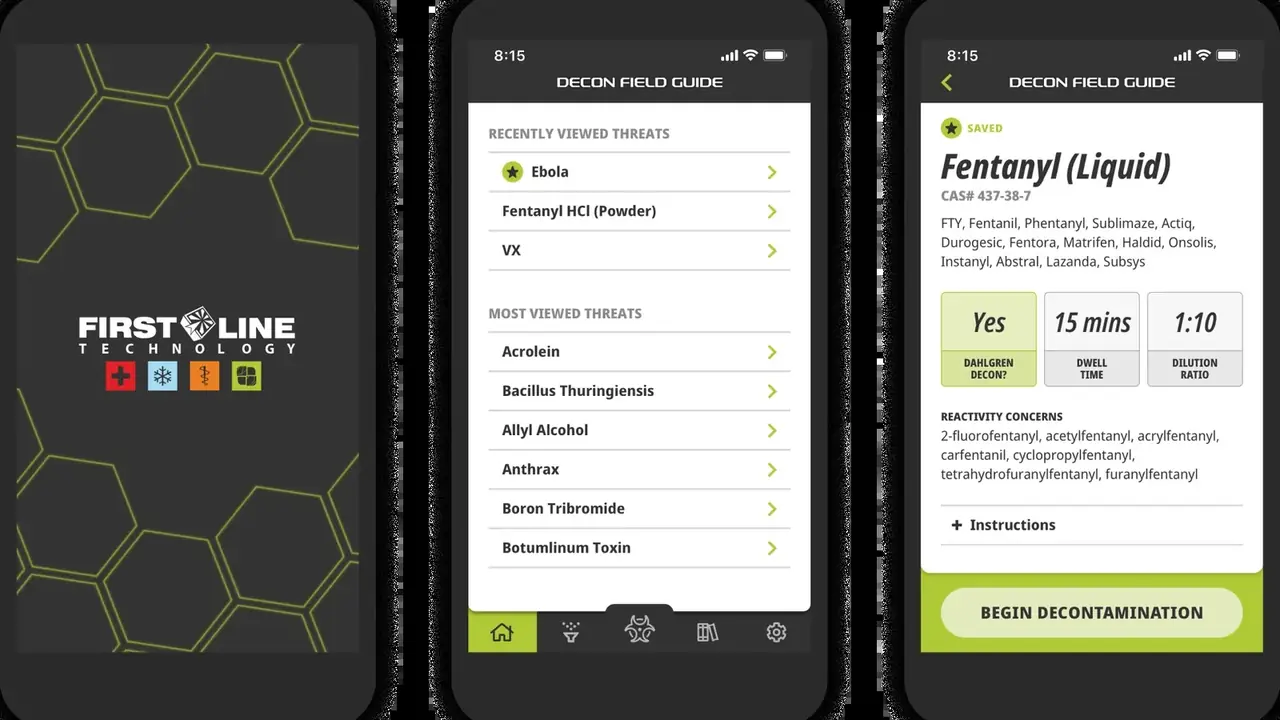
At First Line Technology, a free code review before any work began changed the plan from fixing an app to building a new front end on the existing back end. First Line designs and manufactures disaster preparedness and response equipment for the military, the government and first responders. It also offers its customers a Decon Field Guide app.
First Line was unhappy with the quality of the existing app. Small changes were hard to make, there was no testing in place, and registrations did not connect to the company's CRM, which meant lost sales opportunities.
The case study explains why the review came first. Gnar invests time up front, at no cost to the client, to review a codebase in detail, judge whether it was built to good practice, and find the parts that can be reused before anything is replaced.
The First Line engagement began with a full technical review. The review showed it would be more cost-effective to build a new front end that connected to the existing WordPress back end than to refresh the existing front end. Rebuilding the back end cost too much for what it would return, so it stayed.
The new app added pictorial decontamination instructions, an in-app timer and better threat search, and First Line's team can now update the app's content in real time from WordPress. The result: the new app grew to more than 4X the number of users, to over 8,000. The old app saw one user over the course of two to three days. Now 10 to 15 people use it every day. CEO Amit Kapoor said, "We weren't just a project to them."
Gnar's work on an existing codebase starts the same way. It begins with a free source code audit: senior engineers read your code and tell you in plain English whether to keep it, fix it or rebuild it. The audit can come back saying your codebase is in reasonable shape.
When should you not hire a custom software firm?#
Do not hire one when an off-the-shelf product wins on cost and fit, or when your own engineers have the capacity and the direction to do the work. Gnar's own custom software page puts the first rule in two sentences: buy when an off-the-shelf product wins on cost and fit, and build when it does not.
Gnar Discovery and Design plans both options. Senior engineers at The Gnar Company plan the build and the purchase side by side and say which one wins, even when the answer is to buy. If building wins, you leave with what the software must do, the system design and a fixed price.
The second rule is about your own team. If your own team has the capacity and the direction, you do not need us. Ask whether your IT staff can take on a new build without dropping the work that keeps today's systems running. If they cannot, that is the gap a firm fills.
No-code tools sit in between. No-code gets you to eighty percent. The stretch to ninety-five is why Gnar gets called. That last stretch is your own business rules and a live connection to your ERP or CRM. Try the tools your team already has first, and call a firm when the last stretch is the part that matters.
What should you put in the contract?#
Put seven terms in writing before you sign with any firm on this list, including us: the pricing model, who pays an overage, what gets fixed for free, the support plan, the named team, what you receive at the end and how you leave.
- The pricing model, in one sentence. Fixed price, fixed budget, estimate, or time and materials, and what happens to cost and scope if the work runs long.
- Who pays an overage. The exact words, and whether there is a cap.
- What gets fixed for free. What counts as a bug, how long the promise lasts, and who decides.
- The support plan after launch. What it covers and what it costs each month.
- The named team. Who will do the work, and where each person sits.
- What you receive at the end. The code, the documentation and access to every system the firm set up. Gnar's internal tools page says it plainly: whether or not Gnar hosts and maintains the app after launch, you get the code and the docs.
- How you leave. What the handover looks like if you move the work to your own team or another firm.
If the firm already publishes some of these terms, you can check its contract against its own site. Gnar publishes its case studies with the client's name on them, so you can also check the work.
Which firm fits your situation?#
A company that wants a fixed milestone price and a twelve-month bug-free warranty on the build should look at Gnar first, and a company that wants a fixed budget with controlled scope should look at Atomic Object. The table matches common mid-market situations to the firms whose own sites fit them.
| Your situation | Where to look first |
|---|---|
| You want a fixed milestone price, a twelve-month bug-free warranty and a US team | The Gnar Company |
| You want Atomic Object's Fixed-Budget, Scope-Controlled model and a US team | Atomic Object |
| You want to pay per feature from upfront estimates | Clean Coders Studio |
| You want US-based employees and a blend of statement-of-work milestones and time and materials | Keyhole Software |
| You want exact costs upfront (7T says this holds in 90% of engagements, after requirements gathering) and are fine with a development team in India | 7T |
| You are a manufacturer, logistics or insurance company that wants a "senior-led, virtually embedded" model | Truefit |
Whichever firms you call, ask each one to put its terms in writing before the first proposal.