"How much does it cost to build an app?"
We get this question constantly. From CEOs, from operations leaders, from board members who've been tasked with "figuring out the technology piece." It's the right question. But in its current form, it's unanswerable.
It's unanswerable the same way "how much does a house cost?" is unanswerable. A two-bedroom cabin on a lake in Vermont and a four-story brownstone in Back Bay are both houses. One costs $180K. The other costs $4.2M. The answer depends entirely on the blueprints, the location, and the materials. Software works the same way.
So if you've been shopping for a development partner and getting estimates that range from $50K to $500K for what sounds like the same project, you're not crazy. You're just asking the question before the blueprints exist.
There's a better way to get to a real number. But it requires doing some work upfront.
Why Software Budgets Blow Up
Most software projects that go over budget don't fail because of bad engineering. They fail because of bad planning. Or more accurately, no planning.
The pattern looks like this: A company has an idea for a product. They talk to a few agencies. Each agency asks some questions on a call, makes assumptions about scope, and sends back a number. The numbers are all over the map because each agency imagined a different product. The company picks one (usually not the cheapest, but not the most expensive either, because that feels responsible). Development starts.
Three months in, the team realizes the original scope missed half the requirements. Features that seemed simple turn out to need complex integrations. The timeline stretches. The budget doubles. Nobody's happy, but everyone's too deep to start over.
I've watched this happen dozens of times. We've taken on rescue projects where the client spent $300K+ with another agency and ended up with software their own team couldn't maintain. The root cause is almost always the same: the build was priced before the problem was understood.
No user research. No technical architecture. A scope document that was really just a wish list with no boundaries. That's not a development failure. That's a planning failure.
Every Project Has Two Phases (Whether You Acknowledge It or Not)
Here's how I think about it. Every software project has two phases: figuring out what to build, and building it. Discovery and construction. Planning and execution. Whatever you want to call it.
Companies that skip formal discovery don't actually skip it. They just do the discovery during development, which is the most expensive possible time to learn that your assumptions were wrong. Every "oh, we didn't think about that" moment during a build costs 10x what it would have cost during a planning phase. You're paying full engineering rates to have conversations you should have had with a whiteboard and a prototype.
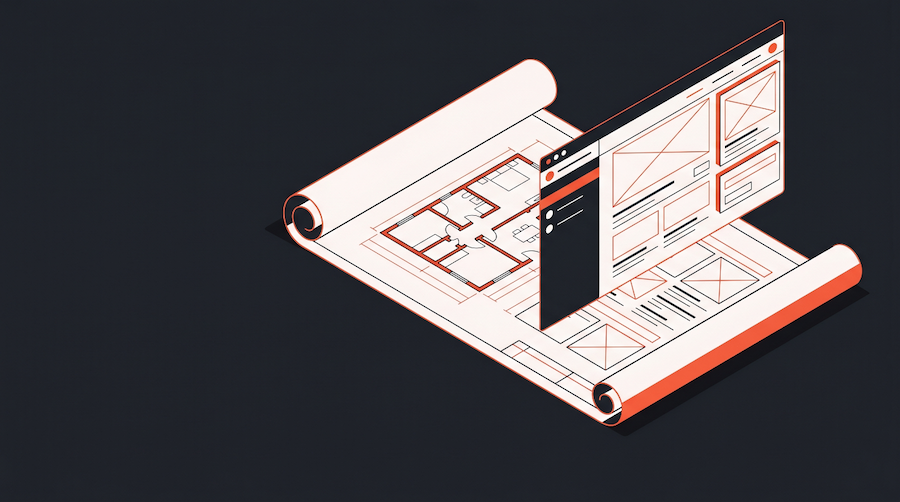
Back to the house analogy. You wouldn't hand a contractor a napkin sketch and say "build this, and tell me what it costs when you're done." You'd hire an architect first. You'd get blueprints. You'd do a site survey. You'd figure out if the soil can support the foundation you want. Then, and only then, would you get a real bid from a contractor.
Software should work the same way. And when it does, the "how much does it cost" question becomes answerable.
What Discovery Actually Produces
We built our Ideate service specifically to solve this problem. It's the architect phase for software. By the time it's done, you have blueprints, not a napkin sketch. And those blueprints come with a guaranteed price for the build.
Six deliverables, each one answering a question you actually care about:
User Research. "What do my users actually need?" Not what you think they need. Not what your VP of sales told you they need on a Tuesday afternoon. What they actually need, validated through interviews with real people who would use the product. We've seen this single step prevent six-figure mistakes. Turns out, the feature a CEO is most excited about is sometimes the one users care about least. Better to learn that in week one than in month six.
Product Requirements Document. "What exactly are we building?" This is the scope boundary. What's in, what's out, and why. It's the document that prevents the "can we just add one more thing?" conversations from derailing your timeline.
User Flows and Design. "What does it look and feel like?" Screens, workflows, mockups. Not abstract descriptions of what a user might do. Actual visual maps of how someone moves through your product, from first login to core task completion.
Technical Architecture Blueprint. "How will it be built?" Tech stack, system design, third-party integrations, infrastructure. This is the structural engineering of your software. It answers every technical question before development starts, so your build team isn't making foundational decisions on the fly.
Interactive Prototypes. "Can we experience it before we build it?" Clickable models of your key workflows that you and your stakeholders can actually use. Not a slide deck. Not a wireframe in a PDF. Something you tap through on your phone and say "oh, that's not right" or "yes, exactly that." Catching problems here costs almost nothing. Catching them during development costs a fortune.
Guaranteed-Price Build Plan. "What will it actually cost to build?" A milestone-by-milestone plan with a fixed price. Not an estimate. Not a range. A guaranteed number. This is the contractor's bid, backed by real blueprints.
(And yes, I know "do more planning" sounds like the most boring advice in the world. I get it. Every exec I've ever talked to wants to skip to the building part. But the companies that do the planning are the ones that come in on budget. Every time.)
Discovery Costs $15K to $30K. Here's What Each Tier Includes.
So what does the planning phase itself cost? We offer three tiers depending on how deep you need to go:
Foundation: $15,000 over 2 weeks. For teams that need to validate fast and get the foundation right. You get a product requirements document, one core workflow designed and prototyped, a technical architecture blueprint, and a guaranteed-price build plan. This is the minimum viable discovery. If your project is well-defined and you mostly need validation and pricing, this is where to start.
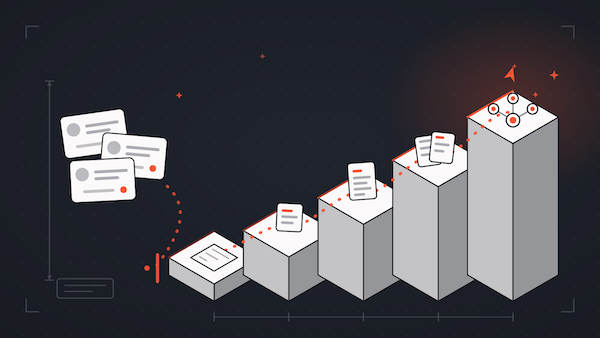
Core: $20,000 over 4 weeks. This is where most of our clients land. You get everything in Foundation plus up to four user interviews, two core workflows, five screen mockups, three design comps, and two interactive prototypes. It's the balance of depth and speed for projects that need real design work before the build begins.
Accelerator: $30,000 over 6 weeks. Maximum depth for complex projects. Six user interviews, four core workflows, six design comps, a full styleguide with a component library, and four interactive prototypes. If you're building something that touches multiple user types or has complex business logic, this is the tier that gives your build team everything they need on day one.
All three tiers end the same way: a milestone-by-milestone build plan with a guaranteed price.
What about the build itself? That depends on what comes out of discovery (naturally), but Ignite builds typically run $150K to $300K and up. The point is, you know that number before you commit. Not a range someone guessed on a sales call. A guaranteed price backed by real architecture and real requirements.
What "Guaranteed Price" Actually Means
I know "guaranteed" is a loaded word when it comes to software. Agencies love making promises during the sales process that evaporate once the contract is signed. So let me be specific about what we mean.
Price guarantee. The price we quote is the price you pay. If the build costs more than we quoted, the overage is on us. Not on you. That's possible because discovery eliminates the unknowns that cause overruns. When you've done the research, designed the workflows, mapped the architecture, and defined the scope with precision, there aren't surprises left. You can guarantee a price because you actually understand what you're building.
Outcome guarantee. The software works as specified. Not "mostly works" or "works with known issues." Works as specified.
12-month bug-free warranty. For a full year after delivery, we fix any non-conforming code at no cost. I'll be honest, I don't know of another agency that offers this. Most agencies consider the project done when they hand over the codebase. We consider it done when it's been running in production for a year without issues.
These three guarantees work together, and they're only possible because of what happens during discovery. You can't guarantee an outcome if you haven't defined it precisely. You can't guarantee a price if you haven't mapped the scope. The planning phase is what makes the guarantees real.
How to Know If You Need Discovery First
Not every project needs a formal discovery phase. If you have detailed requirements, a technical team that's already mapped the architecture, and a clear scope with boundaries, you might be ready to build. (We have a separate offering called Gnar Forge for exactly that situation.)
But if any of these sound familiar, discovery is how you protect your investment:
- You have an idea but no technical plan to back it up
- You've gotten estimates from agencies that vary by 3x or more
- You've been burned by a past project that went over budget or delivered the wrong thing
- Your board or leadership wants a budget number before they'll greenlight development
- You don't have an in-house technical team to define the project requirements
If you're nodding at two or three of those, you're the exact person discovery was built for. And the $15K to $30K you spend on it will save you multiples of that in avoided rework, scope creep, and budget overruns.
The Better Question
You came here asking "how much does custom software development cost?" That's the right instinct. You should know what you're getting into before you sign a contract.
But the more useful question is: "What do I need to know before I can get a real answer?"
You need blueprints. You need a site survey. You need someone to open the walls and check the plumbing before they quote you on the renovation. Discovery is how you get there. And once you have it, the cost question answers itself, with a number you can actually trust.

Mike is Co-Founder of The Gnar Company, a Boston-based software development agency where he leads project delivery for clients like Whoop, Kolide (acquired by 1Password), LevelUp (acquired by GrubHub), Qeepsake (feaured on Shark Tank), and AARP. With over a decade of experience building impactful software solutions for startups, SMBs, and enterprise clients, Mike brings an unconventional perspective having transitioned from professional lacrosse to software engineering, applying an athlete's mindset of obsessive preparation and relentless iteration to every project. As AI reshapes software development, Mike has become a leading practitioner of agentic development, leveraging the latest AI-assisted practices to deliver high-quality, production-ready code in a fraction of the time traditionally required.