

This December 2023 roundup is for developers who follow Static Hermes, the Hermes project for static typing and native compilation. It also covers gen AI in finance, landing pages, Hotwire and five developer tools. Sections added in November 2026 say what became of Static Hermes. Hermes V1 is now the default JavaScript engine for React Native on iOS and Android, per the React Native 0.84 release post. That is why it matters to React Native developers today. The new sections also show how to check that an app runs on the Hermes engine. Quotes from outside pages were read November 18, 2026.
At The Gnar, we're always reading, watching, and listening in order to keep our skills sharp and our perspectives fresh. Every month, we round up our learnings and publish them in a Gnarly Learnings blog post.
In December 2023, we learned about AI applications in finance roles, strategies for top converting landing pages, and Static Hermes. We also pondered how the combination of Rails and Hotwire can be used to replace some of the functionality previously provided only by React.
Business Applications of AI#
McKinsey recently published a brief generative AI guide for CFOs on how and where to integrate gen AI solutions into finance roles.
The writers posit that generative AI can help automate tedious tasks, augment productivity, and accelerate data extraction, potentially increasing the velocity of innovation.
Gen AI can be an important tool for value creation. CFOs should strive to be gen AI enablers, not gatekeepers, and make sure that strategically critical initiatives rapidly and continually receive necessary resources.
Meg McFarlane recently published a Think With Google article discussing the benefits of AI-based advertising strategies.
In a single case study, they found a 36% increase in unique reach, 45% drop in cost, and 30% higher average impression frequency per user by switching YouTube ad strategy to lean more heavily on Google's AI ad optimization.
Where in the past we'd have to do a lot of guesswork to determine the ideal rotation between in-stream and bumper ads, we now let the Google AI decide how often each ad was shown and to whom.
Ecommerce Web Design#
In a February 2023 podcast, Logan Grasby discusses the design of top converting landing pages. He goes into detail about the anatomy of a landing page, discussing the purpose of each section and tips for improving marketing performance.
You can find a summarization of his key points starting around 25:30 in the podcast.
Russ Maschmeyer, product lead for spatial commerce at Shopify, discusses a suite of AI tools called Shopify Magic in a recent episode of Practical AI. The tools can help you with a variety of tasks, from generating product descriptions to generating product imagery.
Design#
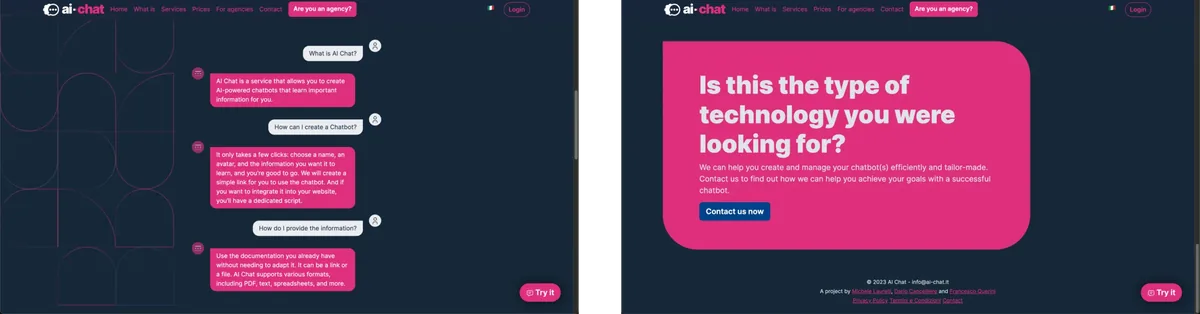
In December of 2023, we came across two sites (Addifico and ai-chat) that present their business and value proposition with eye-catching, interactive websites.

Mobile App Development#
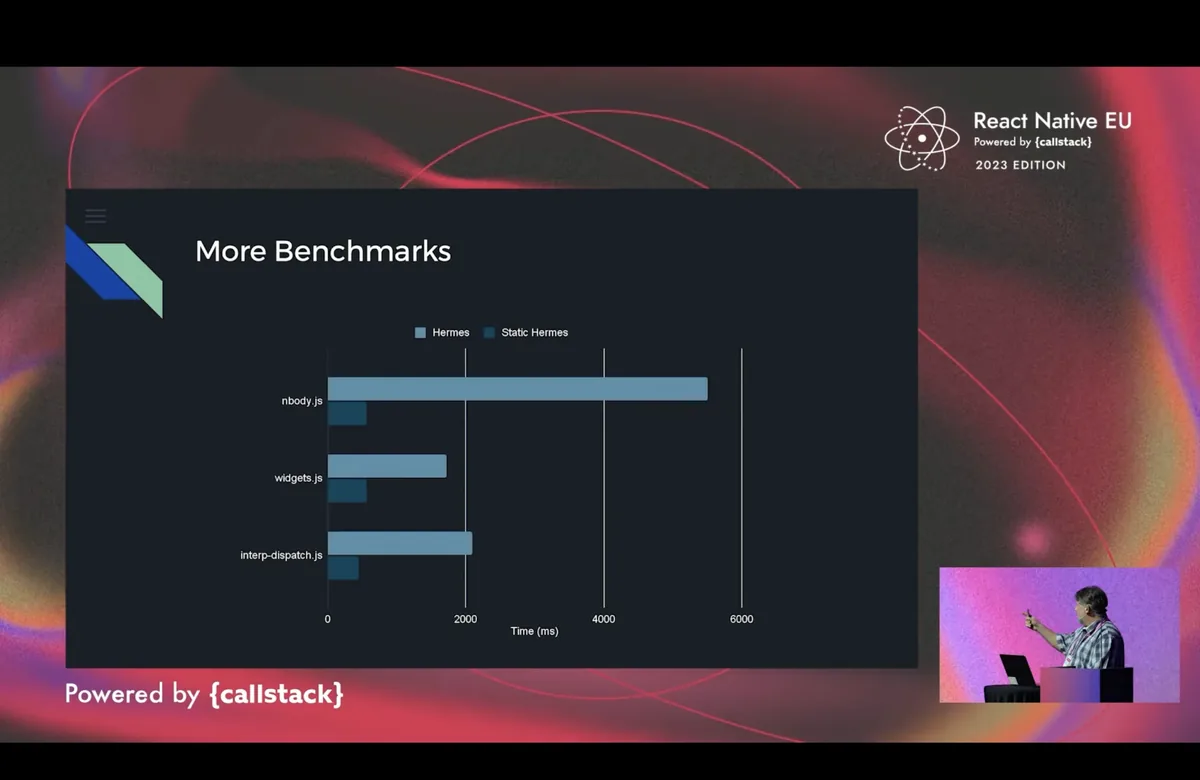
Hermes, the JavaScript engine built and maintained by Meta, is already fine-tuned for running fast React Native applications. But in the presentation "Static Hermes: The Next Generation of Hermes", Tzvetan Mikov explains how JavaScript can be compiled to achieve huge leaps in performance.
[15:00] When we started compiling it to native initially, it was the same performance as Hermes…but now as you can see, it is 10x faster when compiled natively…plus we're certain that there is more headroom. We can probably get to 20x times faster than Hermes.
Tzvetan reports 10x faster performance over traditional Hermes in one benchmark.
He also emphasizes that native compilation unlocks "the possibility of very efficient native platform integration", estimating that call overhead could be between 15x and 18x lower than JSI when calling a native function. This "zero-cost FFI" ultimately opens up the possibility to implement platform integrations "entirely in JavaScript" with "practically no cost, just as if we were a C program".
If you're interested in learning more about Static Hermes, Tzvetan created a blog post discussing how to speed up a micro-benchmark by 300x using Static Hermes.
Gaurav Gautam also wrote a blog post about compiling TypeScript to native code, which Tzvetan discussed in a GitHub thread. That same GitHub thread yielded this remarkable result from the bunnymark benchmark:
RuntimeFPSCPUGPUMemoryC9068%84%48 MBStatic Hermes9070%84%53 MB
What happened to Static Hermes?#
Static Hermes was the code name for work on the Hermes static_h branch, and that branch is now Hermes itself. React Native calls its releases Hermes V1, an opt-in in React Native 0.82 and the default engine in React Native 0.84. The 0.84 post says "Hermes V1 represents the next evolution of the Hermes engine".
The talk where "Tzvetan Mikov explains how JavaScript can be compiled" is "Static Hermes: the Next Generation of Hermes", given at React Native EU 2023. The Hermes README, read November 18, 2026, says the branch "then became the main development line".
Each row below quotes a React Native release post.
| Date | Release | What its release post says |
|---|---|---|
| October 8, 2025 | React Native 0.82 | "React Native 0.82 adds support for opting into Hermes V1". |
| October 8, 2025 | React Native 0.82 | "Hermes V1 does not yet contain JS-to-native compilation (previously known as “Static Hermes”) or the JIT compilation that was presented during React Native EU 2023". |
| December 10, 2025 | React Native 0.83 | "In React Native 0.82, we released Hermes V1 as an experimental opt-in". |
| February 11, 2026 | React Native 0.84 | "Hermes V1 is now the default JavaScript engine for React Native on both iOS and Android, following the initial experimental opt-in in React Native 0.82". |
| October 19, 2026 | React Native 0.88 | "Hermes moves to 260318099. |
The README says "Hermes releases had always been numbered 0.x". Its new scheme is "built from the branch date and bytecode version", and React Native calls those releases Hermes V1 "to distinguish it from the legacy line on the main branch".
The Hermes Branches page says its branch layout "reflects its history more than a plan" and "All development happens on static_h". If you are "interested in learning more about Static Hermes", start with that page and the README.
Does Static Hermes compile JavaScript code to native code?#
It can, with a Hermes tool called shermes, separate from how React Native apps run. In short, Static Hermes compiles JavaScript ahead of time (AOT) to native code and lets typed and untyped JavaScript call each other in the same program. Its static typing is still "not ready for use", and its TypeScript type syntax is "partially supported", as the README and Typed Language page quoted below say. The README says running from bytecode "is how React Native apps run". It says its shermes tool "compiles JavaScript ahead of time all the way to native code, with no interpreter involved". Its "Native compilation" section says the tool "works both on ordinary untyped JavaScript and on typed JavaScript". The README lists a second way, From bytecode, as "The production path": "Code is compiled ahead of time, the bytecode file is memory-mapped, and the interpreter runs it".
The README builds two command line tools, hermes ("compile to bytecode, run bytecode or source") and shermes ("compile to native"). Its example under "Compile the same script to a native executable" is:
build/bin/shermes -O -o hello hello.js
./hello
The README adds: "Hermes can execute JavaScript in four ways, and they can be mixed freely within one runtime". Its JIT entry says: "An optional baseline JIT compiles frequently executed functions to machine code while the app runs". Of the compiler, it says: "The compiler parses, analyzes and optimizes the entire program once, and emits bytecode".
Its "Static typing (in development)" section says: "This is under active development and not ready for use". The Typed Language page opens: "The typed language implementation is in progress and considered unstable". The README also says: "Where a value of unknown type flows into a typed one, for example from any or from untyped code, the compiler inserts a checked cast, which throws at runtime if the value is not of the expected type".
The Typed Language page says calls to a function with no type annotations are not typechecked. It adds: "This allows for convenient calling to untyped JS from typed JS without extra effort or modification". On syntax, it says "The Flow type syntax is supported" and "The TypeScript type syntax is partially supported". The README says "Both Flow and TypeScript syntax are being supported, to different degrees".
The README says TypeScript "can already be run in untyped, unsound mode: the type annotations are stripped and the result is treated as plain JavaScript". For types that hold at runtime, it says: "A typed compiler has to strengthen the language semantics until the types are actually true". On inference, the page says: "Reassignments to a let/var variable must obey the type inferred/declared at the variable's declaration".
In a GitHub thread, Tzvetan Mikov wrote on October 5, 2023: "The C output is a temporary feature to simplify our development (C code is easier to understand than LLVM IR)".
How do you check that a React Native app runs on the Hermes engine?#
Check for the HermesInternal global in your JavaScript code. React Native's Hermes docs page says "A HermesInternal global variable will be available in JavaScript that can be used to verify that Hermes is in use".
That page gives this line:
const isHermes = () => !!global.HermesInternal;The same page says "Hermes is used by default by React Native and no additional configuration is required to enable it". It adds: "React Native comes with a bundled version of Hermes". The Hermes repository's React Native page says: "Use the Hermes that your React Native version ships with".
The docs warn that with "a non-standard way of loading the JS bundle", the variable can be available while the app does not run pre-compiled bytecode. They say: "Confirm that you are using the .hbc file".
Tech Insights#
The tech world evolves incredibly fast, so it's important to stay on top of new strategies for building applications.It's our belief that the Hotwire family of products, including the well-known Turbo and Stimulus, provide a compelling alternative to React for many types of applications.Learn more by reading our blog post, "Ruby on Rails vs. React: Hotwire + Turbo Change the Equation".
What do Turbo, Stimulus and Hotwire Native do?#
Turbo updates parts of a page with HTML sent from the server, Stimulus adds small amounts of JavaScript behavior to that HTML, and Hotwire Native builds native mobile apps around the web app. Hotwire's home page says "The heart of Hotwire is Turbo", for "dividing complex pages into components, and stream partial page updates over WebSocket", and Turbo's site says Turbo Streams "deliver page changes over WebSocket, SSE or in response to form submissions using just HTML". Stimulus's site calls it "a modest JavaScript framework for the HTML you already have", "designed to augment your HTML with just enough behavior". Hotwire Native's site calls it "a web-first framework for building native mobile apps". The table below links each part's site.
Hotwire's site defines Hotwire as "an alternative approach to building modern web applications without using much JavaScript by sending HTML instead of JSON over the wire". Its home page, read November 18, 2026, lists Turbo, Stimulus and Native as its frameworks.
| Part | Its own site's words |
|---|---|
| Turbo | "Turbo Frames decompose pages into independent contexts, which scope navigation and can be lazily loaded". "Turbo Streams deliver page changes over WebSocket, SSE or in response to form submissions using just HTML and a set of CRUD-like actions". |
| Stimulus | "A modest JavaScript framework for the HTML you already have". "it’s not concerned with rendering HTML at all". |
| Hotwire Native | "Hotwire Native is a web-first framework for building native mobile apps". |
The Rails 7.0 announcement of December 15, 2021 calls Turbo and Stimulus "the default choice for new Rails apps".
In Rails 8.1.4.1, released November 4, 2026, the app generator has a skip_hotwire option described as "Skip Hotwire integration". Unless it is in effect, the Gemfile gets the turbo-rails and stimulus-rails gems.
The Gnar Company's post Ruby on Rails vs. React: Hotwire + Turbo Change the Equation puts it this way: "Generally speaking, adding React to an existing Rails application will increase the cost and complexity of your project".
Gnarly Bytes#
- GraphQL: This OWASP Cheat Sheet for GraphQL is a great summary of best practices
- Elixir: Notesclub is a collection of Elixir Livebooks
- Artificial intelligence: Ollama provides a bunch of AI models you can run locally; Fly.io also created a blog post discussing how to run Ollama models on Fly
- Ruby: Ruby on Jets is an interesting Ruby serverless framework for building and deploying APIs to AWS lambda
- Libraries: We discovered Spotlight, a library pitched as "Sentry for Development" (the library is created by Sentry), aims to provide a rich debugging experience during development
What does the OWASP GraphQL Cheat Sheet ask you to check?#
The GraphQL Cheat Sheet introduction lists the areas to check: input validation, expensive queries, access control and insecure default configurations. Gnar's roundup calls it "a great summary". The wording below is the sheet's own, read November 18, 2026.
| Area | The cheat sheet's words |
|---|---|
| Input validation | "Apply proper input validation checks on all incoming data". |
| Expensive queries | "Expensive queries will lead to Denial of Service (DoS), so add checks to limit or prevent queries that are too expensive". |
| Access control | "Ensure that the API has proper access control checks". |
| Insecure defaults | "Disable insecure default configurations (e.g. excessive errors, introspection, GraphiQL, etc.)". |
On query depth and amount, it says: "By default these can both be unlimited which may lead to a DoS". Items in its DoS prevention list include:
- "Add depth limiting to incoming queries"
- "Add amount limiting to incoming queries"
- "Add reasonable timeouts at the application layer, infrastructure layer, or both"
- "Enforce rate limiting on incoming requests per IP or user (or both) to prevent basic DoS attacks"
On introspection it says: "For internal API, the easiest approach is to just disable introspection system-wide". It also warns: "Keep in mind that even if introspection is disabled, attackers can still guess fields by brute forcing them".
How do you run an Ollama model locally?#
Install Ollama, then run ollama run gemma4, the example the Ollama CLI Reference gives under "Run a model". Gnar's roundup says "Ollama provides a bunch of AI models you can run locally". The table lists some of the reference's headings, read November 18, 2026.
| Task (the CLI Reference heading) | Command |
|---|---|
| Run a model | ollama run gemma4 |
| Download a model | ollama pull gemma4 |
| List models | ollama ls |
| List running models | ollama ps |
| Remove a model | ollama rm gemma4 |
The Ollama README says "Ollama has a REST API for running and managing models". Its FAQ says: "Ollama binds 127.0.0.1 port 11434 by default. Change the bind address with the OLLAMA_HOST environment variable".
The Fly.io post the roundup links is dated December 6, 2023. As of November 18, 2026 it carries the notice "Fly GPUs are deprecated and will be unavailable after August 1", which gives no year.
How do you turn on Spotlight?#
Set spotlight to true in your Sentry SDK setup, for development only. The Spotlight site gives JavaScript and TypeScript instructions. It says to set spotlight to true and to "make sure these are only done for development".
Gnar's roundup says Spotlight "aims to provide a rich debugging experience during development". The site, read November 18, 2026, names these steps:
- "Install a Sentry SDK"
- "Configure Sentry.init()": its sample sets
spotlight: trueonly when the environment is not production. - "Install Spotlight App"
The Spotlight README says: "Spotlight is Sentry for Development". It adds: "Spotlight uses Sentry SDKs to capture telemetry data and sends it to the Sidecar, a local proxy server running on your machine". On November 18, 2026, the latest release was 4.12.1, published October 26, 2026, on the releases page.
Contributors:#
Learn more about how The Gnar builds software.