TL;DR
- Traditional BI creates a 4-7 day delay between executive questions and actionable insights
- The analyst bottleneck isn't a people problem—it's an architecture problem designed for batch reporting, not real-time decision-making
- BI2AI uses LLMs + RAG to turn natural language questions into instant analytics, eliminating the interpretation layer
- Executives get conversational analytics that answer follow-up questions in seconds, not days
- The competitive advantage goes to companies that can turn data into decisions fastest
It’s Friday afternoon, and your CEO just emailed the team: “What's driving the sales decline in the Northeast region?"
Your analyst's replies: "Not sure, but I can pull the data. I’ll have that dashboard ready by Wednesday."
The problem? By Wednesday, those insights are stale. The opportunity has passed.
And your competitor—the one making AI-assisted decisions in 30 seconds—has already moved.
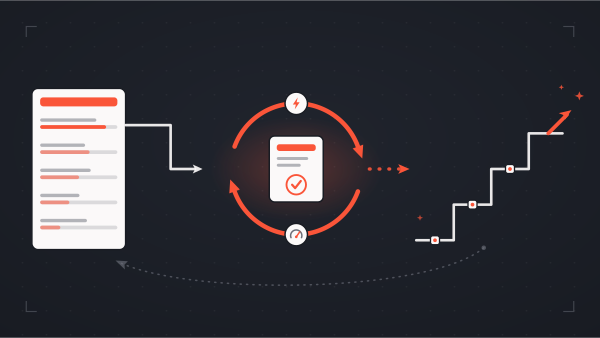
This is the reality we see constantly: traditional BI creates a 4-7 day delay between executive questions and actionable insights.
AI-native companies are iterating in real-time, making your delays more than just inconvenient—it's becoming your biggest competitive liability.
Your analysts work as fast as the architecture allows. The problem is that traditional BI was built for quarterly reviews and monthly board meetings—not for the speed modern business demands.
Are You Stuck In The BI Bottleneck?
Traditional BI creates a multi-step bottleneck that compounds with every question:
- The executive has a business question.
- An analyst interprets that question into data requirements.
- The data engineer extracts and transforms the data.
- The analyst builds the visualization.
- The executive reviews the dashboard, and asks a follow-up question.
- The entire process repeats.
The technology exists to answer most executive questions in real-time. The fact that we're still waiting days is an architecture problem, not a people problem.
Analyst Interpretation Layer Issues Compound
Business questions rarely map cleanly to existing reports.
For example, when an executive asks "Why did customer acquisition cost spike?", the analyst has to infer:
- Which metrics matter—CAC by channel, by cohort, by product?
- Which segments to analyze—new vs. returning, geography, company size?
- What time periods to compare? What attribution model to use?
Analysts spend 60-80% of their time on data preparation, not insight generation.
And by the time they deliver, the executive has three follow-up questions—each requiring new analysis.
Each executive thinks about the business differently, so the same data needs different visualizations for different people.
The Static Dashboard Trap
Even if you get through the analyst interpretation layer, the dashboards only end up showing you what happened. They don't show why it happened.
And every dashboard spawns five follow-up questions that require new dashboards.
Your sales dashboard shows revenue decline. The executive needs to know: Is it pricing? Competition? Sales team performance? Seasonal patterns?
By the time you've built new dashboards to answer those questions, the decision window has closed.
Data Warehouse Architecture
Part of this disconnect is due to how most businesses handle their data. Traditional data warehouses are optimized for batch processing and historical queries. The schema was designed for known questions, not exploratory analysis.
We've seen this play out with many of our clients.
Their competitor launches a new product, executives need market impact analysis, and the data team says "We'll add that data source to next quarter's roadmap."
By then, the competitive window has closed. And the strategic opportunities are missed.
Decisions made on intuition instead of data—not because data doesn't exist, but because it takes too long to access.
What BI2AI Actually Does Differently
BI2AI has the opportunity to fundamentally change the analytics paradigm.
Instead of preparing data for analysis, you simply ask questions. AI handles the heavy lifting automatically.
Think of the traditional BI process:
- Define the business question
- Identify data sources
- Clean and prepare data (60-80% of time)
- Map relationships across tables
- Build queries
- Create visualizations
- Interpret results
That's a week of work, minimum.
The BI2AI shortens that process immensely:
- Ask a question in natural language
- Get an answer
That's 30 seconds.
How does it work so well and so fast? BI2AI uses Retrieval-Augmented Generation (RAG) to connect business language to data reality—mapping "customer churn" to the right tables, handling inconsistencies, and generating SQL or Python queries in seconds.
In essence, the system understands business context, not just data structures.
The Power of RAG
Conversational Data Access Occurs Without Heavy Preparation
Large Language Models are trained on vast amounts of code, documentation, and business context.
They understand that "customer churn" might be stored as "account_termination_date" in one system and "subscription_cancelled" in another.
You don't need to know table names, column names, or how data is structured.
RAG connects your question to actual data locations without requiring technical details. Just ask questions the way you think about the business.
Data Preparation Becomes Dramatically More Efficient
Traditional BI requires extensive data preparation: cleaning nulls, standardizing formats, mapping fields across systems, resolving conflicts.
LLMs can identify data quality patterns, suggest corrections, and handle inconsistencies when proper metadata exists.
If customer IDs are stored as "cust_id" in one system and "customer_number" in another, the LLM can recognize these as the same concept and join them appropriately—provided the semantic layer properly defines these relationships.
This doesn't eliminate data preparation entirely, but it dramatically reduces the manual effort required.
Pattern Recognition Happens Automatically Through Conversation
Instead of building separate models for anomaly detection, you can identify unusual patterns conversationally.
Ask "What's unusual about Q3 performance?" and the system highlights deviations from expected patterns.
Ask "What's likely to happen if this trend continues?" and it projects scenarios based on historical data.
The conversational interface means you can refine analysis through dialogue: "What if we increase marketing spend by 20%?" or "Show me the most pessimistic scenario."
These insights should still be validated against established statistical methods for critical decisions—but the speed of exploration changes everything.
Visualization Becomes Automatic and Context-Aware
No more deciding between bar charts, line graphs, and scatter plots.
The AI automatically selects the visualization that best answers your specific question. "How does X compare across regions?" implies comparison—bar chart. "How has X changed over time?" implies temporal analysis—line chart.
And if the visualization isn't right, you just say "Show this as a heatmap instead" and it adapts instantly.
The Technical Architecture (Without the Jargon)
Digging in a bit further, there are four key components make all of this work:
The Semantic Data Layer:
- Business logic and data relationships are encoded as vector embeddings.
- The system automatically discovers relevant data sources for any question by searching across your data documentation, schemas, and business definitions.
- "Revenue" means different things in SaaS vs. retail—the semantic layer captures that context.
LLM Orchestration Engine:
- Translates executive questions into data queries.
- Chooses appropriate aggregations and filters based on question intent.
- Selects visualization types.
- Generates plain-language explanations.
- The LLM writes SQL, Python, or whatever query language your data speaks, then translates results back into business language.
Dynamic Query Generation:
- No pre-built dashboards required.
- Queries are generated at question-time, not design-time.
- Follow-up questions retain context automatically.
- The system can combine data sources that were never architected to work together.
Intelligent Insight Synthesis:
- Assists with identifying anomalies and patterns when combined with proper baselines. Suggests relevant follow-up questions.
- Provides business context for technical findings.
- Connects insights to potential actions.
- The LLM can reason about cause and effect relationships, not just correlate numbers.
What This Looks Like in Practice
The best part of all this? You don’t have to be an expert to see the impact and results. Here are some examples of the before and after:
Before BI2AI
The executive says "I need to understand why customer churn increased in Q3."
- Wait 5 days for analyst report.
- Report shows churn by segment but doesn't explain causation.
- Ask for follow-up analysis on top churning segments.
- Wait another 3 days.
- Insight arrives too late to affect retention campaigns.
With BI2AI
The executive asks "Why did customer churn increase in Q3?"
The system automatically identifies relevant data sources—CRM, usage logs, support tickets, billing—cleans and maps the data, and analyzes patterns.
You get a response in 30 seconds:
"Churn increased 23% in Enterprise segment, driven by customers with fewer than 50 active users.
Primary pattern: 78% churned within 60 days of support ticket escalation.
Competitor X launched a lower-priced tier targeting this segment.
Anomaly detected: Churn spiked specifically in customers using Feature Y less than 3x per week."
Executive asks another question: "Show me churn risk for current customers matching that profile."
Instant predictive risk scores using historical patterns, visualized as an interactive heatmap by segment and risk level.
Executive: "What retention actions should we prioritize?"
The system provides prescriptive recommendations:
"Proactive outreach to 127 high-risk accounts could prevent $2.3M in annual churn based on historical intervention success rates.
Focus on Feature Y adoption training—customers using it 5+ times weekly have 87% lower churn."
This whole process goes from days to seconds. From descriptive analytics to pattern recognition to scenario planning—all in one conversation.
Real-World Impact Patterns
Merchandising Optimization
Retailers need rapid inventory analysis to optimize markdowns, but traditional BI takes weeks to deliver insights on seasonal trends, regional performance, and competitive pricing.
With BI2AI, merchandising executives ask natural language questions about inventory aging, sell-through rates, and markdown optimization. Analysis time drops from weeks to minutes, and analyst teams get redeployed to strategic pricing work instead of routine reporting.
Risk Analysis Acceleration
Insurance underwriters need timely risk analysis during pricing renewals, but waiting for data teams to build custom reports creates competitive disadvantage.
With conversational access to claims history, actuarial models, and market data, underwriting leaders can explore risk patterns and pricing scenarios in real-time.
Pricing decision cycles compress from days to same-day. Request backlogs shrink dramatically. Risk teams focus on model improvement instead of report generation.
Product Experimentation Velocity
Product teams wait for data teams to build dashboards for every experiment, creating bottlenecks that slow innovation.
With self-service analytics for experiments, product managers can analyze results, segment users, and identify patterns without data team dependency.
Experiment analysis moves from days to real-time, and data teams focus on infrastructure instead of routine reporting.
Why This Isn't Just "AI Dashboarding"
It seems impressive, but let’s make one thing clear: lot of vendors are slapping "AI" onto traditional BI tools.
That's not what we're talking about here.
Most "AI BI" tools add a chatbot interface to existing dashboard platforms. You can search through pre-built dashboards with natural language. It's the same bottleneck with a different interface—you still need someone to build the dashboard first.
BI2AI replaces dashboards entirely with natural language interaction:
- It writes its own queries dynamically based on your questions
- It generates appropriate visualizations for each specific question
- It combines data sources that were never architected to work together
- It ties every answer directly to business context and impact
Traditional "AI BI" makes existing dashboards searchable. BI2AI eliminates the need for dashboards by understanding your business questions and generating answers on demand.
The Strategic Implications
- Speed: Decisions move from weeks to hours. Strategic opportunities get captured instead of missed. Real-time course correction replaces quarterly reviews.
- Democratization: Every executive can be their own analyst. No more VIP queue for executive requests. Middle managers get the same insights as the C-suite.
- Quality: Decisions based on comprehensive data, not whatever data happens to be available. Follow-up questions answered immediately, enabling deeper understanding. Less "analysis paralysis" because iteration is instant.
- Cost Structure: Analyst teams focus on strategic work instead of routine reporting. Reduced dashboard maintenance burden—no more "dashboard graveyard" of unused visualizations. Lower total cost of analytics ownership.
The competitive advantage no longer goes to companies with the most data. It goes to companies that can turn data into decisions fastest.
A Word on AI Reliability
We'd be doing you a disservice if we didn't address this directly: RAG-based systems can still produce errors or hallucinations.
While each new day is seeing AI grow, even the best LLMs get things wrong sometimes.
Critical business decisions should include validation mechanisms, confidence scoring, and human oversight.
BI2AI excels at rapid exploration and hypothesis generation—it accelerates the 80% of work that used to be manual drudgery—but it should be part of a governed decision-making process, not a replacement for judgment.
The technology frees your analysts from routine work so they can focus on strategic analysis, model building, and insight interpretation—the work that actually requires human expertise.
What BI2AI Implementation Actually Requires
BI2AI needs clean, accessible data (it doesn't have to be perfect), a semantic layer defining business logic, and a data governance framework for AI access.
It needs LLM access, a vector database for semantic search, and an integration layer connecting to your existing data warehouse.
What it doesn't require:
- Replacing your existing BI tools (it works alongside Tableau, PowerBI, Looker)
- Perfect data quality (AI handles messy data better than traditional BI)
- A complete data warehouse overhaul (it starts with existing infrastructure).
The change management piece matters too. Executives need training on asking good questions. Analyst roles evolve from reporters to insight architects. You need a new governance model for AI-generated insights.
A typical implementation path: 30-day proof of concept with one high-value use case, 60-day departmental rollout with governance guidelines, then enterprise scale at 90+ days with custom semantic layers for specialized domains.
The Reality? You Needed BI2AI Yesterday. We Can Help
Traditional BI was built for a different era: monthly board meetings, quarterly planning cycles, annual budgets. Modern business moves faster than that architecture allows.
BI2AI eliminates the bottleneck between question and insight. It doesn't replace your analysts—it makes them superhuman. It doesn't replace your data warehouse—it makes it accessible.
The question isn't whether your organization will adopt conversational analytics. The question is whether you'll lead or follow.
Companies that can turn data into decisions in minutes instead of days will create compounding competitive advantages—and the capability gap is widening every quarter.
—
The Gnar helps companies move from traditional BI to AI-powered conversational analytics through our BI2AI methodology. We've deployed this approach across multiple industries to accelerate executive decision-making from days to seconds. If you're ready to stop waiting for dashboards and start getting answers, let's talk.

Pete Whiting is the Head of Growth and Client Service at The Gnar Company, where he leads business development, marketing, and client service activities to help companies build high-quality custom software. With over a decade of experience at the firm, Pete specializes in driving revenue growth and ensuring high utilization of development teams through strategic go-to-market and product marketing initiatives.
Prior to joining The Gnar Company, Pete held executive roles in operations and marketing at firms such as Dispatch and MeYou Health. He also spent five years at Vistaprint, where he served as Director of Product Marketing and Strategy for the Asia Pacific region, accelerating annual revenue and gross profit growth through data-driven planning and multi-channel marketing. Pete’s career began in engineering and management consulting, including seven years at Deloitte Consulting leading growth strategy and post-merger integration for global industrial and high-tech clients. He holds an MBA with honors from UCLA Anderson and both a Master’s and Bachelor’s degree in Materials Science and Engineering from Brown University.