The way software gets built is changing. As AI coding tools like Cursor, Kiro, and Claude Code become standard in development workflows, forward-thinking teams are discovering that traditional Agile methodologies, designed for human developers in 2001, aren't optimized for AI-assisted execution. This article introduces Context-Driven Development (CDD), a methodology built specifically for the AI era, and explains why it delivers faster results with greater predictability. You'll learn what CDD is, how it differs from Agile, and how to implement it in your organization.
What Is Context-Driven Development?
Context-Driven Development (CDD) is a software development methodology where detailed requirements serve as the primary input for AI-powered code generation. Rather than gathering requirements just-in-time during sprints, CDD invests heavily upfront in precise specifications. This enables AI coding tools like Cursor, Kiro, and Claude Code to generate production-ready code at significantly higher velocity.
The core insight is simple: AI coding agents require precise context to be effective. The more specific your requirements, the faster and more accurately AI generates production-ready code.
The Gnar Company developed CDD after delivering 250+ products, recognizing that AI fundamentally changes how software should be built.
What Is the Difference Between Agile and CDD?
The fundamental difference is when and how requirements are gathered.
Agile assumes requirements will emerge and change throughout development. It optimizes for flexibility and responding to change.
CDD assumes that investing heavily in upfront requirements pays exponential dividends when AI handles execution. It optimizes for precision and generation speed.
CDD isn't universally "better" than Agile—it's optimized for different constraints. When AI can generate code 10x faster than humans but requires precise context, the bottleneck shifts from "writing code" to "defining what to write."
Why Traditional Agile Doesn't Work With AI Tools
Agile was designed in 2001 for human developers in uncertain environments. Its principles made sense when code was written line by line. AI coding assistants change the equation:
The Agile Manifesto's preference for "working software over comprehensive documentation" becomes counterproductive when your most powerful tool—AI—needs comprehensive documentation to function.
How Context-Driven Development Works
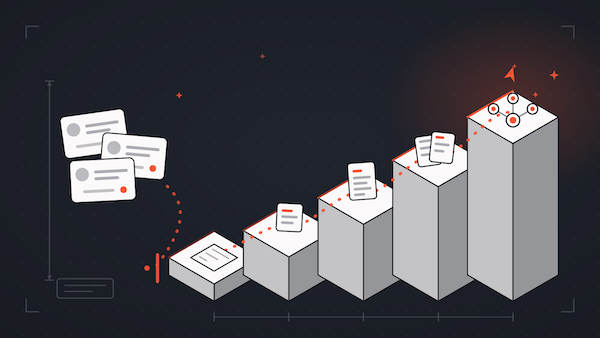
CDD organizes software development into three distinct phases:
Phase 1: IDEATE (The Input)
Philosophy: "Measure twice, cut once."
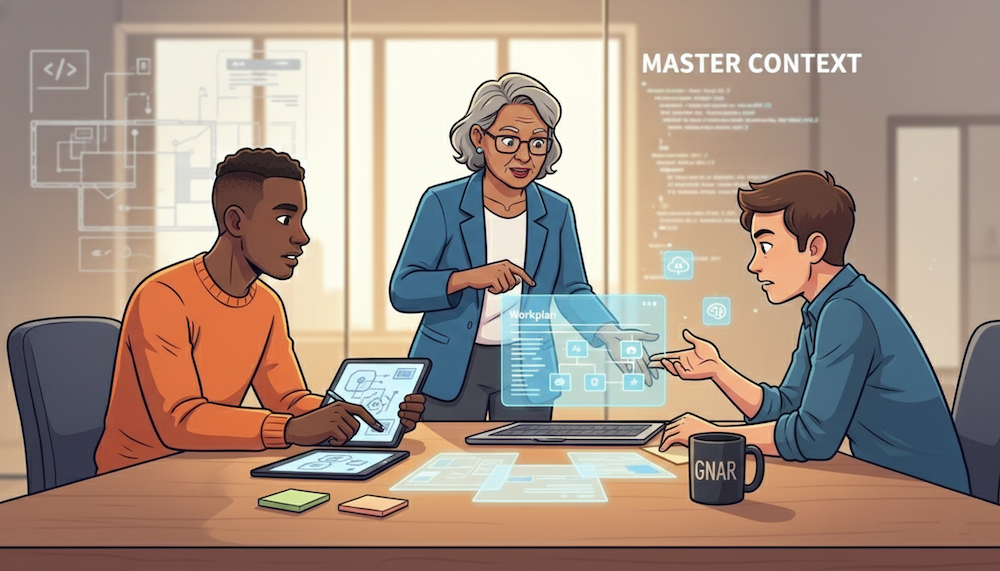
Before any code is written, CDD invests heavily in deep discovery and requirements gathering. This isn't traditional requirements documentation—it's building what we call the Master Context.
Deep Discovery & Requirements
- Stakeholder immersion sessions to extract specific business logic, edge cases, and integration requirements
- Formalization of findings as Functional Specifications (not vague user stories)
- Mapping requirements against AI capabilities to identify the optimal technical approach
Solution Prototype
- Spec-based prototyping to validate requirements interpretation
- Stakeholder feedback before production code begins
Build Plan (Master Context)
- Translation of human requirements into Technical Context: system architecture, data models, API contracts
- Macro-planning that defines the MVP roadmap and high-level milestones
Phase 2: IGNITE (The Implementation)
Focus: High-velocity construction.
Because requirements were finalized in Ideate, this phase is purely about execution speed.
Foundation (Sprint 0)
- Configure AI toolchain (Cursor, Kiro, Claude Code)
- Implement API specs and shared types first—creating the "rails" for AI agents
- Align team on macro-milestones
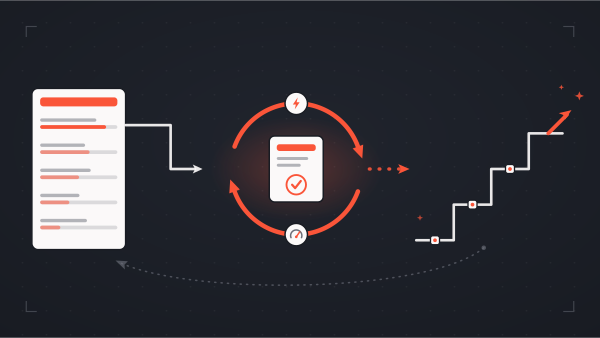
The CDD Execution Cycle
Instead of pausing for planning sprints, CDD uses continuous "micro-planning" within the execution loop:
- Define (Architect): Select a feature from the current milestone, convert it into a Workplan (Context Spec)
- Generate (AI Agent): Ingest the Workplan, write tests to match requirements, generate implementation
- Verify (Collaborative): Technical review for quality/security + product owner acceptance against original requirements
Team Structure for Scale
For multi-developer projects, CDD uses a federated model:
- Lead Architect: Maintains Master Context integrity (shared config, schema, API)
- Stream Architects: Execute requirements for specific domains (web, mobile, etc.)
Phase 3: MAINTAIN (Sustainability)
AI agents excel at pattern matching, making long-term maintenance faster and more reliable:
- Context-aware maintenance: Agents use established architecture to apply fixes without regression
- Proactive security: Automated scanning with immediate patch suggestions
- New initiatives: Feed back into Ideate, restarting the deep discovery loop
When Should You Use Context-Driven Development?
CDD is most effective when:
- You're using AI coding tools (Cursor, Kiro, Claude Code, etc.)
- Requirements can be specified in detail before development begins
- Speed of execution is a priority once requirements are locked
- You want to reduce change requests and scope creep during development
- Your team includes experienced architects who can translate business needs into technical context
CDD may not be ideal when:
- You're in pure exploration/R&D mode with genuinely unknown requirements
- The product vision is intentionally vague and discovery-driven
- You're not using AI-assisted development tools
The Business Case for CDD
Organizations adopting Context-Driven Development report:
- Faster delivery: The Ignite phase runs at significantly higher velocity because AI agents have clear, actionable context
- Fewer change requests: Upfront investment in Ideate catches misunderstandings before code is written
- Reduced rework: Detailed specifications mean less "that's not what I meant" during acceptance
- Better cost predictability: Fixed-scope Ideate phases enable accurate project estimates
The key insight: spending more time on requirements isn't waste—it's the highest-leverage investment when AI handles execution.
How to Implement CDD in Your Organization
Start With Your Next Project
- Extend your discovery phase: Before writing code, invest in documenting specific business logic, edge cases, and integration requirements
- Create a Master Context: Translate requirements into technical artifacts—system architecture, data models, API contracts
- Configure your AI toolchain: Ensure your team has access to AI coding assistants and knows how to provide effective context
- Adopt the CDD cycle: Define → Generate → Verify, with micro-planning replacing separate planning sprints
- Measure the difference: Track velocity, change requests, and rework compared to previous projects
Shift Developer Mindset
The biggest change in CDD is the developer's role. Developers become Architects of Context rather than Writers of Code. This requires:
- Stronger systems thinking and architecture skills
- Ability to translate business requirements into technical specifications
- Quality review capabilities (the "Verify" step becomes critical)
- Prompt engineering and AI collaboration skills
Conclusion
Context-Driven Development represents a fundamental shift in how software gets built. The teams that thrive won't be those that type faster, they'll be those that learn to feed AI the right context.
The future of software development isn't about writing code—it's about architecting the context that generates it.
The Gnar Company pioneered Context-Driven Development through 250+ software projects. We help organizations build custom software using AI-first methodologies with guaranteed outcomes and fixed pricing.
Frequently Asked Questions
What Does CDD Stand For?
CDD stands for Context-Driven Development, a software development methodology designed for AI-assisted coding where detailed requirements serve as the primary input for AI code generation.
Is CDD a Replacement for Agile?
CDD is an evolution of Agile for AI-assisted development. It maintains Agile's focus on delivering working software but shifts when and how requirements are gathered to optimize for AI execution.
What Tools Are Used in Context-Driven Development?
CDD works with any AI coding assistant including Cursor, GitHub Copilot, Kiro, Claude Code, Winsurf, and Devin. The methodology is tool-agnostic but requires AI assistance to achieve its velocity benefits.
How Long Is the Ideate Phase in CDD?
The Ideate phase length varies by project complexity, but typically represents 15-25% of the total project timeline. This upfront investment enables the remaining 75-85% to execute at significantly higher velocity.
Can CDD Work With Distributed Teams?
Yes. CDD's federated model with Lead Architects and Stream Architects is specifically designed for multi-developer and distributed teams, with the Master Context serving as the single source of truth.

Nicholas Maloney is a Co-Founder of The Gnar Company, where he leverages over two decades of software industry experience to transform complex ideas into foundational digital products. He specializes in building scalable software solutions, implementing AI-driven applications, and leading high-performing development teams. A veteran engineer and Certified Scrum Master, Nick is dedicated to creating elegant, impactful solutions that solve gnarly problems and drive business growth.
Before co-founding The Gnar Company in 2016, Nick served as Lead Engineer at MeYou Health and was a Senior Software Engineer at Terrible Labs, where he built digital products for a range of clients from startups to large enterprises. His career also includes technical roles at Massachusetts General Hospital's MIND Informatics and a four-year tenure as a Web Architect at Bentley University. Nick holds a Bachelor of Science in Computer Information Systems from Bentley University.