Are Your Legacy Systems Bleeding You Money?
TL;DR
- Technical debt now accounts for 40% of IT balance sheets (McKinsey)—and 60% of CIOs report it has risen materially over the past three years. Every new project costs 10-20% more just to work around existing debt
- AI-native competitors operate at 3-4x your velocity within 36 months due to AI-augmented development
- 95% of AI initiatives fail (MIT 2025), primarily due to legacy architecture, untrained teams, and organizational resistance
- AI modernization isn't rip-and-replace—it's an incremental approach that maintains business continuity
- The 24-month window is closing—companies that modernize now can build sustainable advantages before AI capabilities commoditize
Here's a scenario we've seen play out dozens of times.
A competitor launches an AI-powered feature in three weeks.
Your roadmap says six months for something similar.
Then your VP of Engineering starts talking about "technical constraints", mentioning monolithic apps and brittle integrations.
In essence, your data pipelines are being held together with duct tape and hope–so good luck matching your competitor’s go-to-market velocity.
But the real problem isn't your technology's age.
It's that your systems were never built for AI.
And in the AI era, that architectural gap isn't just expensive—it's compounding.
At The Gnar, we've spent years modernizing these systems at scale. And what we're seeing right now should worry every technology leader who's been kicking the modernization can down the road.
Math That Should Keep CTOs Up at Night
Here's the truth that far too many CTOs don't want to accept: Technical debt isn't a line item. It's a tax on everything you build.
According to McKinsey research, technical debt accounts for approximately 40 percent of IT balance sheets. CIOs estimate that tech debt amounts to 20 to 40 percent of the value of their entire technology estate before depreciation. For larger organizations, this translates into hundreds of millions of dollars of unpaid debt.
And it's getting worse, not better. Sixty percent of the CIOs McKinsey surveyed reported their organization's tech debt had risen perceptibly over the past three years. Some 30 percent of CIOs believe that more than 20 percent of their technical budget—money ostensibly dedicated to new products—is diverted to resolving issues related to tech debt.
You're not just paying to stay in place. You're paying a 10-20% surcharge on every new initiative before you write a single line of new code.
But the cost side is only half the equation. The velocity gap is where things get truly brutal.
McKinsey found that companies actively managing their tech debt free up engineers to spend up to 50 percent more of their time on work that supports business goals. Meanwhile, companies in the bottom 20th percentile for technical debt are 40 percent more likely to have incomplete or canceled IT modernizations than those in the top 20 percent.
The gap compounds. Organizations with high technical debt spend 40% more on maintenance costs and deliver new features 25-50% slower than competitors. While you're burning budget on workarounds, AI-native competitors are accelerating—and the distance between you is widening every quarter.
This is what we like to refer to as the "AI Modernization Paradox." McKinsey's research reveals a vicious cycle: companies with severe tech debt sink almost half of their IT change spend into applications they would just as soon retire. One bank was on the verge of committing roughly $100 million to replace an aging system—before realizing the effort wouldn't actually reduce their tech debt burden.
The longer you wait to modernize, the more expensive it becomes, while the competitive disadvantage of not modernizing accelerates simultaneously. Every quarter of delay compounds in both directions.
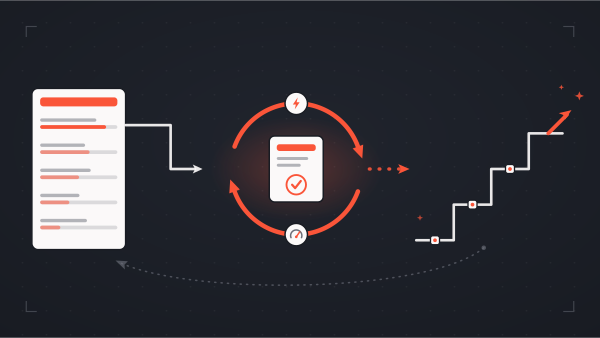
AI Modernization Paradox
The symptoms of the AI Modernization Paradox show up differently depending on the organization, but the pattern is consistent.
A Growing Velocity Crisis
Your competitors are launching features in weeks. Your six-month development cycles are stretching to nine months as system complexity grows. The gap is widening, not closing.
An Accelerating Talent Drain
Your best engineers are leaving for companies with modern stacks. Exit interviews cite "legacy systems" and "inability to use modern AI tools" as primary reasons.
The people you need most to fix the problem are walking out the door because of the problem.
A Shadow AI Explosion
This one's the tell. Over 90% of employees are using personal AI tools like ChatGPT at work, without governance or security oversight. And here's the kicker: they're getting better results than your official enterprise deployments. Your systems are the bottleneck, not your people.
Industry-Wide Innovation Paralysis
Every new AI capability requires months of integration work. By the time you've integrated last year's breakthrough, your competitors are already leveraging this year's. You're perpetually implementing yesterday's AI.
Four Blockers Hiding In Your Legacy Systems
After years of modernization work, we've identified four patterns that consistently block AI adoption. None of them are purely technical.
1. Tribal Knowledge Trapped in Legacy Architecture
Your systems are held together by knowledge that exists only in the heads of senior engineers—people who are approaching retirement.
The data warehouses are optimized for historical reporting, not real-time AI inference. The monolithic applications can't be experimented with safely. And nobody's documented why things work the way they do.
The path forward isn't rip-and-replace. It's extracting that tribal knowledge into code and documentation while gradually decomposing monoliths using a "Strangler Fig" pattern—wrapping legacy components with modern interfaces and replacing them incrementally while maintaining business continuity.
2. Teams That Haven't Been Trained
The resistance you're seeing isn't about opposition to innovation. It's about teams that haven't been properly equipped to work with AI. Engineers worry it will expose gaps in their expertise.
Product managers don't know how to evaluate AI-powered features. Executives hesitate to invest in technology that their teams can't use effectively.
AI fluency isn't taught through slide decks. It's built through hands-on delivery—co-building projects, solving real problems with real data. Organizations that build fluency systematically see adoption accelerate exponentially as confidence builds.
3. Processes Designed for a Different Era
Annual planning cycles. Multi-month approval workflows. Phase-gate methodologies are designed for predictable, low-risk initiatives. These processes make rapid AI experimentation impossible.
We've seen banks where change management takes six months from request to production—while AI capabilities evolve in weeks. By deployment time, the underlying models have been superseded twice.
You need lightweight experimentation frameworks that allow safe, fast iteration while maintaining governance. Separate tracks for AI experimentation versus production deployment.
4. The "Easy Button" Illusion
This might be the most dangerous blocker. Organizations treat AI as plug-and-play—buy the tools, hire a data scientist, watch the magic happen. It doesn't work that way.
Even the most advanced AI models hallucinate 16-48% of the time. Without expertise in prompt engineering, model evaluation, and output validation, you're deploying systems that produce confidently wrong answers.
We've seen financial services companies ship chatbots that fabricate policy terms. The teams lacked frameworks to catch errors before production and monitoring to detect when AI was inventing information.
AI fluency has to exist at every level—engineering, product, leadership. Companies working with experienced AI partners succeed 67% of the time versus 33% for those going solo. AI expertise can't be bought off the shelf. It has to be built or borrowed.
What AI Modernization Should Look Like
Here's the good news: you don't have to throw away your existing systems and start from scratch.
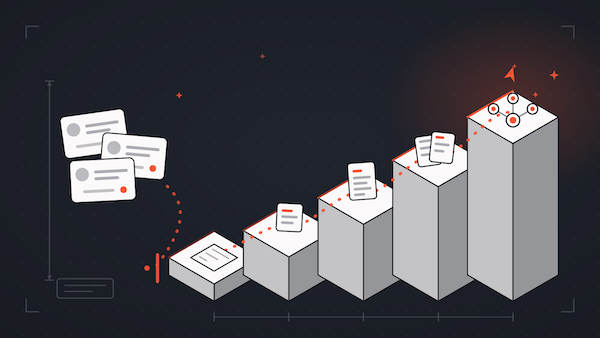
Successful AI modernization is incremental. It's about identifying the right architectural seams and modernizing strategically—not comprehensively.
Going back to the idea of the Strangler Fig pattern, this allows you to replace legacy components gradually while keeping the lights on.
AI-ready architecture has four pillars:
- Data architecture that supports both training and inference with real-time event streams and semantic layers
- Agentic architecture where AI systems understand business context and can orchestrate multi-step workflows safely
- Flexible compute infrastructure that separates experimentation from production
- AI-native development practices embedded across your teams:
- prompt engineering as a discipline
- model evaluation in CI/CD pipelines
- observability that tracks AI behavior and decisions
The starting point is usually a focused audit. Start by asking, “Where are the highest-impact modernization opportunities?” Then start looking for where the skill gaps exist, and use that to create a risk-adjusted roadmap that delivers quick wins.
The Window Is Closing - Don’t Get Left Behind
We're in a 24-month window where first-movers can still build sustainable competitive advantages. After that, AI capabilities commoditize and architectural flexibility becomes table stakes.
MIT's 2025 research found that 95% of AI initiatives fail—primarily due to legacy architecture, untrained teams, and organizational resistance. But the 5% that succeed are creating compounding advantages that become nearly impossible to overcome.
The warning signs are clear: development velocity declining quarter over quarter, maintenance burden growing, competitive feature gaps widening, engineers citing "legacy stack" in exit interviews, shadow AI proliferating because official systems can't keep up.
If you're seeing these patterns, the cost of delay is compounding daily.
The best time to start AI modernization was two years ago. The second-best time is now.
The Gnar helps companies transform from AI-curious to AI-powered through pragmatic, engineering-led modernization. Our team brings 80+ years of combined experience and battle-tested frameworks that only come from architecting these systems at scale. If you're ready to stop accumulating technical debt and start building your AI-ready future, let's talk.

Mike is Co-Founder of The Gnar Company, a Boston-based software development agency where he leads project delivery for clients like Whoop, Kolide (acquired by 1Password), LevelUp (acquired by GrubHub), Qeepsake (feaured on Shark Tank), and AARP. With over a decade of experience building impactful software solutions for startups, SMBs, and enterprise clients, Mike brings an unconventional perspective having transitioned from professional lacrosse to software engineering, applying an athlete's mindset of obsessive preparation and relentless iteration to every project. As AI reshapes software development, Mike has become a leading practitioner of agentic development, leveraging the latest AI-assisted practices to deliver high-quality, production-ready code in a fraction of the time traditionally required.