Deduction management automation is software that handles the deductions in each customer payment. It pulls each deduction out of the payment, codes it by reason, and matches it to the purchase order and the proof of delivery. Then it sends the deduction to the person who decides to accept it, dispute it or write it off. As general advice, AI fits best in the reading and matching, and the decision stays with a person who can see the evidence.
This guide is for the CFO of a wholesale distributor whose accounts receivable team is managing deductions by hand. It covers the deduction types retailers take, the six steps of deduction management, and the proof and dispute windows in retailers' own vendor guides. It ends with where AI helps, which numbers to track, and how to test an agent.
The Gnar Company builds AI automation and custom AI agents. Its agents page says: "We build AI agents for mid-sized companies on NetSuite or a similar system. The agents do routine finance and operations jobs, like matching bank lines at month-end". Gnar has not published a deductions project. The deduction workflow below is general advice built on public sources.
What is deduction management in accounts receivable?#
Deduction management is the accounts receivable work of checking each amount a customer subtracts from a payment. The team then decides what to do about each deduction. AccountingTools defines deduction management as "the process used to verify payment deductions made by customers".
A deduction starts as a short payment. The customer pays less than the invoiced amount and gives a reason. The reason can arrive as remittance detail, a portal entry or an email. Oracle's documentation for its Deductions and Settlement module gives the flow this way:
- "Receive a short pay from a customer, including from the Receivables lockbox".
- "Create a claim from Receivables for the short pay difference within the receipt".
- "Assign ownership of the claim".
- "Research and resolve deductions quickly and accurately".
- "Settle the claim".
SAP's configuration guide for SAP Dispute Management explains why the work exists: "In business relationships, business partners frequently reduce the amounts of payments". It goes on: "These reductions have usually not been agreed with the payment recipient, and the payment recipient therefore needs to investigate and resolve them".
Who works on a deduction?#
In SAP's example, accounts receivable opens the dispute case and other teams supply the facts. An accounts receivable accountant finds an underpayment and opens the case. An employee in sales and distribution calls the customer. The customer says "the goods were damaged on delivery". That employee checks the claim "by calling the quality department". Then the employee grants a credit and records "Damaged goods as the reason". As general advice, a distributor's deductions pull in the warehouse, the carrier and the sales team that agreed the trade promotions in the same way.
What types of deductions do retailers take?#
Retailer vendor guides name deductions for shortages, pricing differences, off-invoice discounts, returns and compliance fines. The table below quotes two of them. One is Best Buy Canada's Vendor Claims Guidelines. The other is the Sally Beauty vendor guide, April 8, 2019 edition.
| Deduction type | What the guide says | Proof the guide asks for |
|---|---|---|
| Shortage (Best Buy Canada) | It will "pay the related Vendor invoice in full and simultaneously deduct from payment the value of the shortage" | Documentation "listed on the form, based on the dispute reason" |
| Pricing difference (Best Buy Canada) | "the prices on the purchase order shall be taken as correct", except recently price protected goods in transit | Documentation "listed on the form, based on the dispute reason" |
| Off-invoice discount (Best Buy Canada) | Negotiated discounts "will be deducted from Vendor remittance on the allowable date" | Documentation "listed on the form, based on the dispute reason" |
| Return to vendor (Best Buy Canada) | Report discrepancies "within 72 hours of receiving the shipment from our Returns Center" | The Product Discrepancy Notice Form, then backup by dispute reason |
| Compliance chargeback (Sally Beauty) | "The chargeback fee amount will be deducted from our payable balance to you" | Proof the order arrived on time, complete or in line with the guide |
In Sally Beauty's guide, a chargeback is a fee for not meeting the guide's shipping and compliance requirements. It is deducted from what Sally Beauty owes the vendor.
Does every retailer accept the same proof?#
No, the retailer guides quoted here disagree on what proof counts. Best Buy Canada requires the cross referencing on a proof of delivery (POD) to have been "present on the original shipper's Bill of Lading or Manifest at the time of shipment". The Leslie's vendor compliance guide, rev. 04-01-2020, takes a different line. It defines a valid POD as "a freight bill stamped and signed by an authorized representative of the carrier". It also says "We do not accept a Bill of Lading as a valid form of POD". Sally Beauty's guide gives a different reason on chargebacks: "A signed, stamped BOL does not provide evidence that specific items, or specific quantities of any items were received on time".
As general advice, store each retailer's proof rule in your deduction management records, next to its deductions. Then the right supporting documents go out with the first dispute.
Which deductions are valid, and which are erroneous deductions?#
A deduction is valid when the customer was entitled to take it. It is invalid, or erroneous, when it was not. Oracle's Accounts Receivable Deductions Settlement guide describes the second case. Customers "may charge more than what they are supposed to claim or deduct".
Best Buy Canada's guide says it "will undertake all reasonable efforts to ensure that it takes only those bona fide deductions that it is permitted to take". A valid deduction gets settled. Oracle's module lists ways to resolve deductions that include "Creating credit memos" and "Associate promotional accruals". The second one links a deduction to the promotion it pays for. An invalid deduction gets disputed. AccountingTools says deduction management systems aim to verify deductions quickly "so that the collections staff can follow up with customers in regard to invalid short pays".
How does the deduction management process work, step by step?#
The deduction management process runs in six steps that take each deduction from capture to root cause. They are capture, reason code, supporting documents, the decision, the dispute and the root cause. The steps are general advice, built on the ERP documentation and retailer guides quoted in each one.
- Capture each deduction from the payment and the remittance.
- Assign a reason code.
- Gather the supporting documents.
- Decide whether to accept, dispute or write off.
- File the dispute inside the retailer's window.
- Send the root cause back to the team that caused it.
Step 1: Capture each deduction from the payment and the remittance#
In deduction management, every deduction starts when cash is matched to the invoices it pays. Here is an illustrative example. A retailer pays $9,400 against a $10,000 invoice. Its remittance lists a $600 shortage. The $600 becomes one deduction with its own record, owner and dispute deadline.
Remittance detail can arrive electronically. X12 publishes the transaction sets used for Electronic Data Interchange (EDI). It says its 820 Payment Order/Remittance Advice "can also be a remittance advice identifying the detail needed to perform cash application to the payee's accounts receivable system". It says its 812 Credit/Debit Adjustment "can be used to notify a trading partner of an adjustment or billback".
Retailers also run their own portals. Best Buy Canada requires disputes to be filed on its web portal "AP Visibility". As general advice, deduction management automation starts by pulling every source into one set of deduction data.
Step 2: Assign a reason code#
In deduction management, a reason code says what kind of deduction it is, and it decides who works it. AccountingTools says routing deductions to subject matter experts requires "that all customer deductions be coded by type when the related invoices arrive".
SAP's guide shows how an ERP can carry those codes. It lets a team "link the Reason to the Reason Codes of the accounts receivable accounting system". When the cause is unclear at first, it says "you should define Unknown as the Reason". It also lets the code set the priority. In SAP's words, "you can give higher priority to dispute cases with the Reason 'late delivery' than you do to dispute cases with the Reason 'price problem'".
As general advice, keep one list of standardized codes for your own team. Then map each retailer's codes onto it.
Step 3: Gather the supporting documents#
A dispute needs the documents the retailer's guide asks for, and each retailer decides what proof counts. Each document below comes with the source that names it.
- The purchase order. Best Buy Canada's pricing rule takes the prices on the purchase order as correct.
- The invoice and the retailer's debit note. Leslie's asks for both in a payment dispute.
- The signed bill of lading (BOL). Leslie's asks for a "signed BOL" in a payment dispute, though it does not accept a BOL as proof of delivery.
- The proof of delivery. Best Buy Canada's guide lists the date of shipment, valid cross referencing and the full delivery address. It also lists the "Printed Name and clear signature of receiver" and the "Number of skids, cartons, pieces said to be shipped".
- The ship notice. X12 says its 856 Ship Notice/Manifest "can be used to list the contents of a shipment of goods".
- For trade promotion deductions, the promotion agreement and the allowances it sets. This item is general advice.
Step 4: Decide whether to accept, dispute or write off#
Each deduction ends in one of three deduction management outcomes. Accept it as valid, dispute it as invalid, or write it off because it is too small to research. Oracle's write-off setup page says "Investigating deductions can be time intensive and often not cost effective for smaller deductions".
The setup page lets a team set dollar thresholds "at the business unit, customer, account, and bill-to site levels". Oracle's older E-Business Suite Deductions Settlement guide (Release 12.1) says a write-off "means that your organization is absorbing these costs as expenses". The same guide gives an example. A manufacturer sets "an automatic write-off threshold for $200". A claims manager then "notices that a particular customer has massive deductions slightly below the threshold". The manager unchecks those claims to investigate them.
As general advice, open deductions hold up cash flow until each one is resolved. Review small dollar deductions by customer each month. Then a customer who stays just under the threshold shows up.
Step 5: File the dispute inside the retailer's window#
File every dispute before the retailer's deadline, because the guides quoted here set one. Some say the deduction stands after it. The windows below are copied from each guide.
| Retailer guide | Window to dispute | What the guide adds |
|---|---|---|
| Best Buy Canada | "no later than 90 days of the cheque date" | It "has 90 days to review and resolve"; appeals go in "within 30 days of the reconciled date" |
| Leslie's, payment disputes | "within 90 days of the check date" | "or the deduction(s) will stand" |
| Leslie's, performance offsets | "within thirty (30) days of the offset date" | Late ones "will stand as filed without further review" |
| Sally Beauty, chargebacks | "within 10 days of your receipt of the Monthly Report" | Filed "on the form enclosed with the Monthly Report" |
As general advice, give every open deduction a due date from its retailer's rule. Sort the dispute queue by days left. With windows from 72 hours to 90 days in these guides, a monthly review would miss the short ones.
Step 6: Send the root cause back to the team that caused it#
In deduction management, deductions repeat until someone fixes the cause, so the last step is feedback. AccountingTools advises: "Provide Feedback to Departments Causing Deductions". It notes that "A common issue is for deductions to be caused by problems arising in other departments".
Oracle's module supports the same review. It says you can "Analyze the root causes behind deductions, with the help of claim types and claim reasons assigned while resolving the claim". As general advice for a distributor, send shortage causes to the warehouse and the carrier. Send pricing causes to whoever owns the price file. Send compliance chargebacks to whoever owns the retailer's routing guide.
Where does AI fit in deduction management automation?#
As general advice, AI fits in deduction management where people read documents and match them. That covers pulling deduction lines out of remittances and portal exports, and reading scanned proof of delivery. It also covers proposing a reason code and lining each deduction up with its purchase order and invoice. The decision to accept, dispute or write off stays with a person, and every action the AI takes is logged.
Anthropic's PDF support documentation says "You can ask Claude about any text, pictures, charts, and tables in PDFs you provide". Its sample uses include "Converting document information into structured formats". The same page lists limits. The format must be a "Standard PDF (no passwords/encryption)". PDF support also "is subject to the same limitations and considerations as other vision tasks".
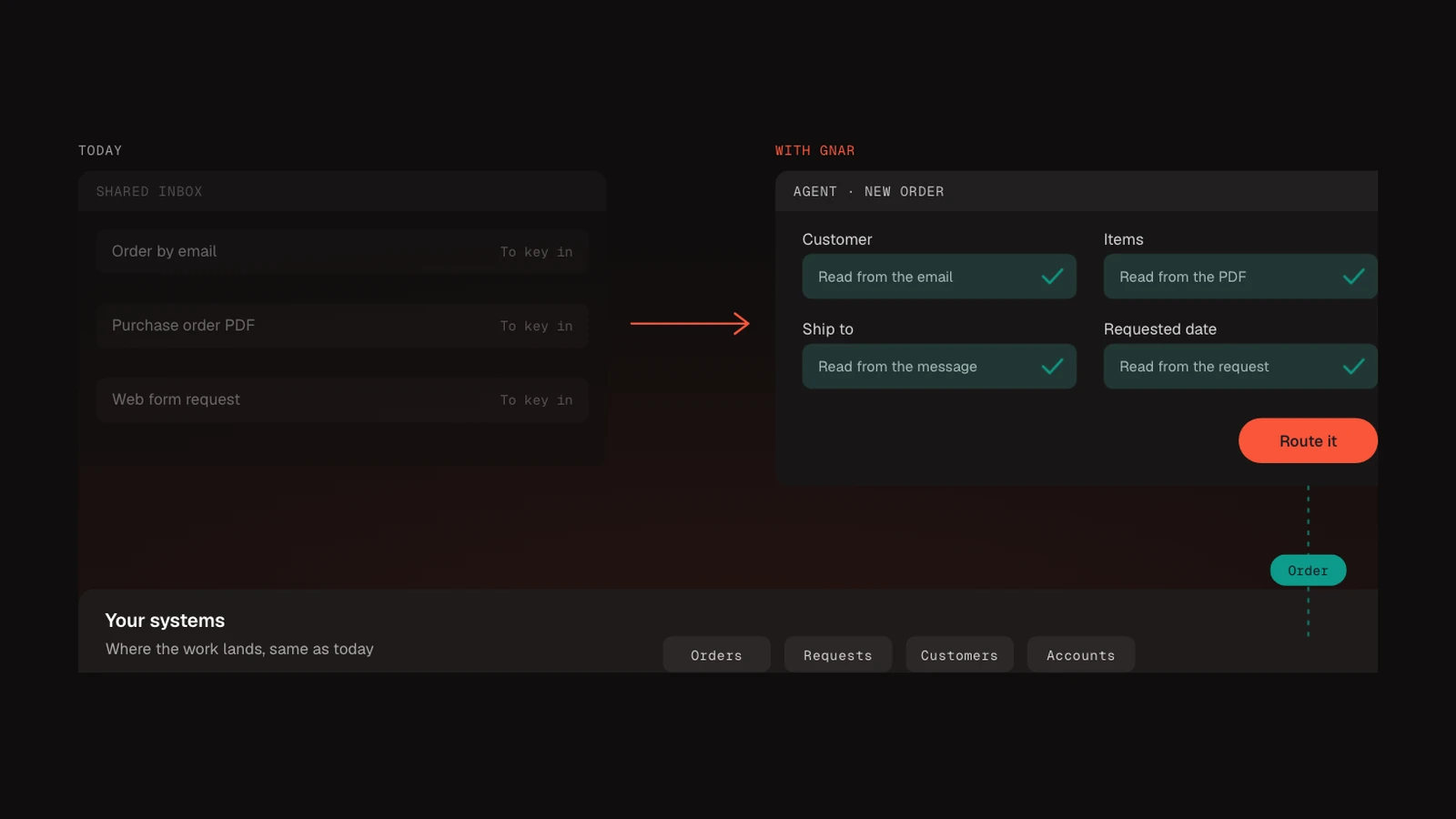
Gnar's AI automation page describes the general job: "Orders, requests and data arrive in different formats, and someone has to read them and key them in. We replace those steps with agents that read, extract and route automatically". As general advice, deduction management automation can read deductions the way AI workflow automation reads orders. The AI puts what it reads into named fields, and a check runs before anything lands in the ERP.
The table is general advice for each step.
| Step | What software or AI can do | What a person keeps |
|---|---|---|
| Capture | Read remittances and portal exports into one list | Fixing lines it cannot read |
| Reason code | Propose a code from the remittance text | Approving any new code |
| Documents | Find the purchase order, bill of lading and POD | Asking the carrier for missing proof |
| Decide | Flag deductions under the write-off threshold | The accept, dispute or write off call |
| Dispute | Draft the dispute with the documents attached | Approving and filing it |
| Root cause | Count deductions by code and customer | Fixing the cause with the team |
Can AI decide whether a deduction is valid?#
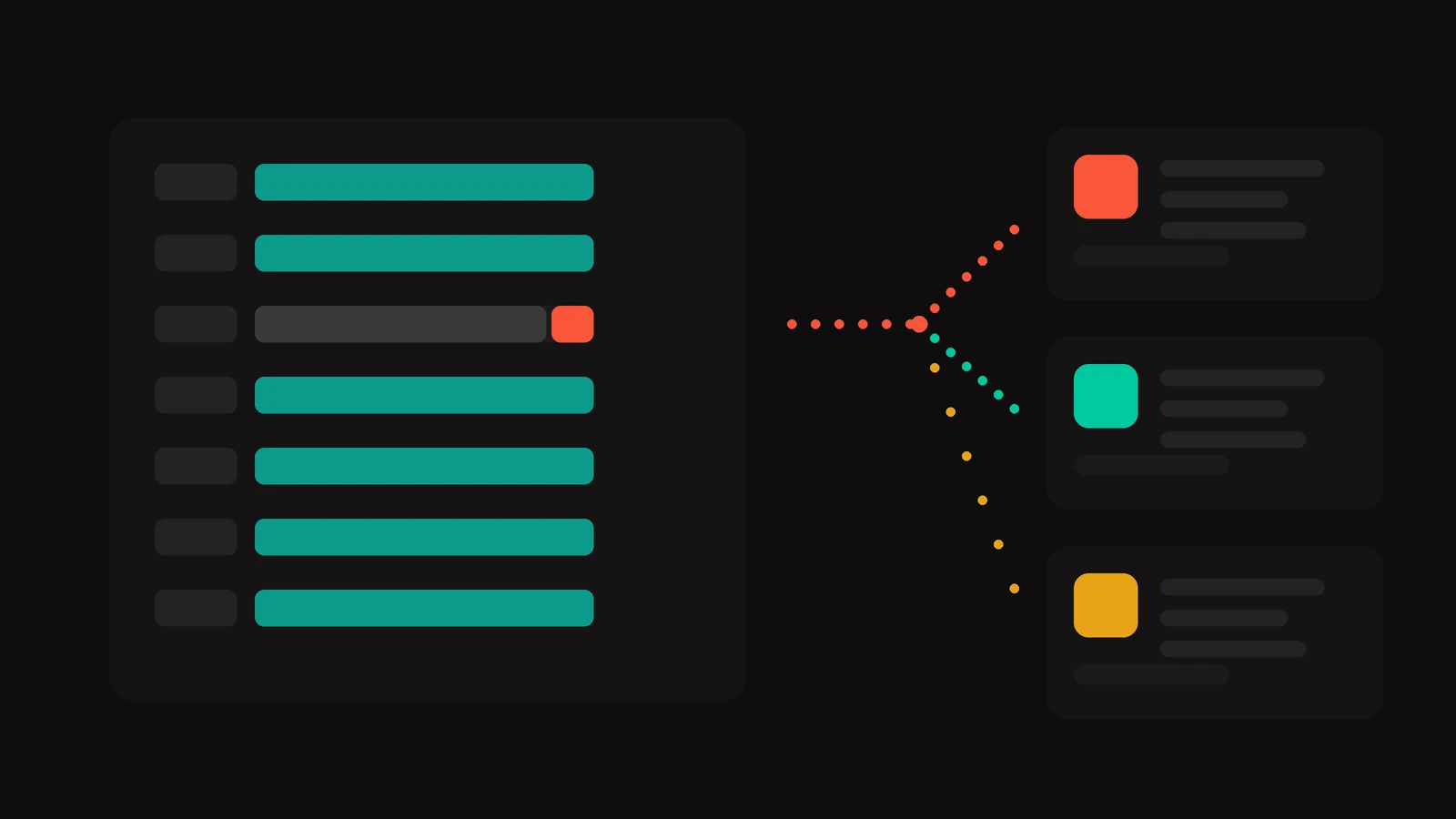
As general advice, AI should propose a verdict with its evidence attached, and a person should approve it. Gnar's agents page describes the control for the agents it builds: "Changes you marked for approval wait for a person". It adds: "Requests the agent isn’t sure about go to your team".
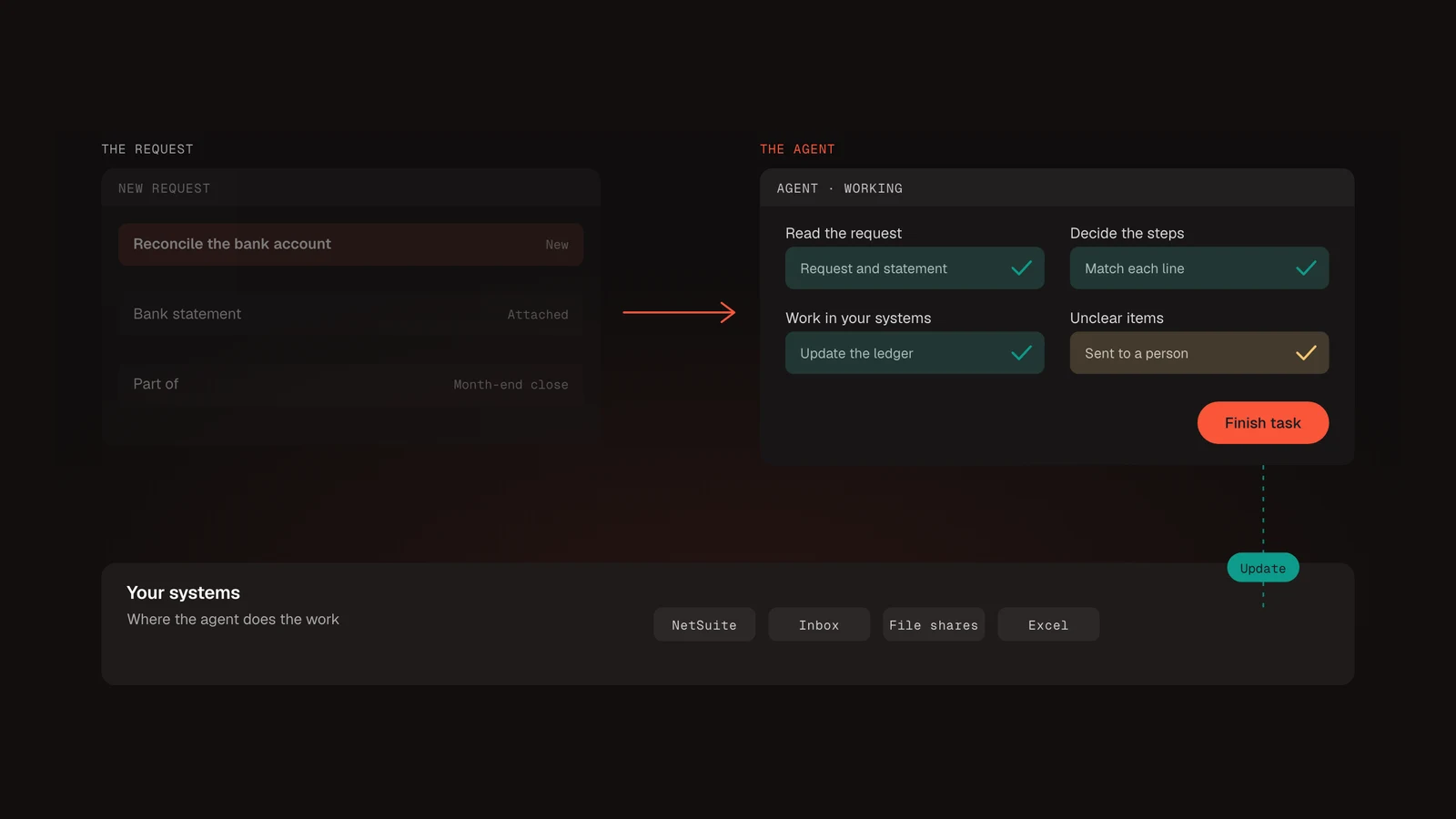
The same page describes a reconciliation job at month-end: "An agent matches the lines and updates the books. Your team handles only the lines it can’t match". As general advice, a deductions agent can be set up with that split. The agent matches each deduction to its documents and drafts a verdict. People take the deductions it cannot match, plus every dispute before it is filed.
What should you check in your ERP before buying deduction management software?#
Check whether your ERP already has a deduction management or dispute module before you pay for a separate tool. Oracle and SAP both document one. Oracle's Deductions and Settlement can "Centralize deductions and overpayments, with accountability and aging". SAP's guide says "In the case of an underpayment, you can create a dispute case in the system".
Each question below cites the Oracle or SAP page that describes the feature. Ask the same questions of your own ERP.
- Does it open a record from a short payment? Oracle creates "a claim from Receivables for the short pay difference within the receipt".
- Does it age deductions? Oracle lists "Setting up aging methods".
- Does it link a deduction to a promotion? Oracle lists "Associate promotional accruals".
- Does it write off small deductions under a threshold, with a reviewer? Oracle's setup page lists "Deduction Threshold" and "Write-off Reviewer".
- Does it rank work by reason? SAP lets you "assign a Priority for each reason code".
Gnar's agents page gives a test for a first agent job: "A routine job your team does by hand today that your current system cannot already do". As general advice, list what your module already does. Then look at the manual work left over.
Which deduction management numbers should a CFO track?#
Track five deduction numbers: deduction aging, the recovery rate on disputes, the write-off total, deductions by reason code, and missed dispute windows. The definitions in the table are general advice. The third column names where the data sits, from the sources above.
| Number | How to count it | Where the deduction data sits |
|---|---|---|
| Deduction aging | Open deduction dollars by days since the payment | The aging methods Oracle's module lists |
| Recovery rate | Dollars repaid after disputes, divided by dollars disputed | Dispute outcomes from each retailer's portal or email reply |
| Write-off total | Dollars written off, by reason code | Write-off records, which Oracle suggests reviewing |
| Deductions by reason | Count and dollars per code and per customer | The reason codes from step 2 |
| Missed windows | Deductions that passed the dispute deadline | Each retailer guide's window |
Oracle's module suggests you "Proactively analyze write-off thresholds through occasional review of claim write-offs". AccountingTools suggests you "Aggregate deductions by customer, to determine which ones are taking the most deductions". As general advice, a rising count in one reason code points to a fix upstream, in the warehouse, the price file or the shipping routine.
How do you test a deductions agent before it touches live records?#
Test it on deductions your team already closed, where you know the right answer. Compare the agent's reason code and verdict with the outcome your team reached. Gnar's agents page describes this testing for the agents Gnar builds: "We test every agent on your own past cases, including the odd ones. Each time we change it, the tests run again. So if its scores drop, we see it before the change goes live".
The steps below are general advice for a deductions test.
- Pull closed deductions from recent quarters with their final outcome. The outcome is accepted, won on dispute, lost on dispute or written off.
- Include the odd ones, such as a deduction split across invoices, a missing POD or a reason code that changed.
- Run the agent with read-only access. Gnar's agents page says "Give it read-only access, and it can see records but never change them".
- Compare the agent's code and verdict with your team's on every deduction. Write down each miss.
- Rerun the same set after every change to the agent or its prompts. Engineers call these tests evals.
Should a distributor build a deductions agent or buy software?#
As general advice, buy deductions software when a product handles your retailers and your ERP without heavy setup. Build when it does not. Gnar's agents page draws that line for its own work: "Gnar’s custom AI agents are for work that no product handles, or that a product handles only after heavy setup".
The same page advises testing before any purchase: "The agent market is still young. So before you sign, test any product on your own past cases".
A deductions agent that works in a demo still needs tests, logs and access rules before it runs every day in production. Gnar puts that gap this way: "The prototype works. Getting it into production is a different job, and it is the one we do".
A distributor with engineers of its own may not need a partner at all. Gnar's headline on that point reads: "If your own team has the capacity and the direction, you do not need us". Its agents page states the terms of the service: "You choose which changes need a person’s OK, and you own the code. If an agent shouldn’t do the job, we’ll tell you".