Which US legacy software modernization company fits depends on the system you run. For COBOL mainframes, look at Heirloom Computing and CloudFrame. For AS/400 and IBM i, Fresche Solutions and Keyhole Software. For old desktop and Access apps, Ticomix and JBS. For custom web apps and the tools around an ERP, The Gnar Company and JBS.
We are The Gnar Company, and we are in the last group. Read our entry knowing who wrote it. Every fact about another firm in this post comes from that firm's own website, checked on November 11, 2026.
The Gnar Company does legacy software modernization for companies that run on software nobody inside can change. Work on an existing codebase starts with a free source code audit. Gnar's paid modernization work starts with a fixed-price diagnosis from $15,000 for two weeks.
Three commitments on every build engagement: a fixed milestone price with any overage on us, a guaranteed outcome meaning the software works as specified or we fix it, and a twelve-month bug-free warranty. It covers Discovery, Build, Forge and Maintain. It does not cover Embed. On Compass, Immerse and Integrate, ask us.
This guide is written for the CIO of a manufacturer or distributor with a 15-year-old system that runs the business and that nobody inside can change. Start with which kind of system you have.
Which kind of legacy system do you have?#
This guide sorts legacy systems into four kinds: COBOL on a mainframe, AS/400 or IBM i, old desktop or Access apps, and custom web apps and the tools around an ERP. The table shows the signs of each. Find yours, then read that section.
| Your system | Signs you have it | The kind of firm that fits |
|---|---|---|
| COBOL on a mainframe | CICS screens, batch jobs in JCL, a mainframe contract | Automated conversion to Java |
| AS/400 or IBM i | Green screens, RPG code, an IBM i server | IBM i specialists or firms that move code off IBM i |
| Old desktop or Access app | FoxPro, VB6, Delphi or Access, installed on each PC | Rebuild to a modern web or .NET app |
| Custom web app beside an ERP | A web app built 10 to 20 years ago, data copied to and from the ERP | Custom software firms that work beside the ERP |
If you have more than one, start with the system that blocks the most work today.
COBOL mainframes: Heirloom Computing and CloudFrame#
Both firms in this group convert COBOL to Java with automated, compiler-based tools, as their own sites describe.
Heirloom Computing says its compiler-based approach transpiles mainframe workloads directly to functional Java. Its published case for the Pennsylvania Higher Education Assistance Agency (PHEAA) says 64 million lines of COBOL became Java applications running under Apache Tomcat on AWS. Heirloom's about page says mission-critical operations continue uninterrupted throughout the move, and that its methodology ensures parallel production periods and carefully managed cutover processes.
CloudFrame, headquartered in New Jersey, says its compiler-based approach converts COBOL to functionally equivalent, maintainable Java. CloudFrame says its Continuum product carries a commercial commitment to functional equivalence, on its resources page.
Neither firm publishes a price on the pages we read. Ask each one how it handles the code that does not convert cleanly, and who maintains the Java after the conversion.
Also ask yourself what the code does. If most of it encodes business rules your team still needs, a conversion keeps them. If much of it supports work you no longer do, ask each firm whether part of it should be retired instead of converted.
AS/400 and IBM i: Fresche Solutions and Keyhole Software#
Firms in this group either modernize around the IBM i system or move its RPG and COBOL code to a newer platform. Fresche offers to keep IBM i in place or move the code to a modern language, and Keyhole lists options including rehosting, replatforming, refactoring and rearchitecting. Ask each which one it recommends for your system.
Fresche Solutions focuses on IBM i. Its IBM i page says it updates RPG, COBOL and Synon applications, modernizes green screens, and can keep IBM i in place as the core or move RPG, COBOL and Synon applications to a modern language. It offers a subscription model that spreads the cost over time. In its published case for the Borough of Chambersburg, Fresche's portal gave residents 24/7 account access.
Keyhole Software, headquartered in Kansas City, lists COBOL, RPG and AS/400 among the platforms it supports. It says it uses a phased approach rather than a full rewrite, while the existing system continues to operate. Its published work includes moving COBOL systems to .NET Core and replacing a Visual Basic 6 platform for Kansas City Southern Lines Railway.
Old desktop and Access apps: Ticomix and JBS#
Ticomix and JBS name desktop and Access systems on their pages, and Clean Coders Studio has a published case involving a Microsoft Access database.
Ticomix rebuilds FoxPro, VB6, Delphi and Access applications as modern .NET systems. It publishes a price range: simple applications can start around $10,000, while complex, heavily customized systems can reach the low six figures. It offers a fixed-fee assessment starting at $3,000. Its assessment page says the fee is credited toward the project if you sign a modernization project within 6 months.
JBS Custom Software Solutions, based in Chadds Ford, Pennsylvania, modernizes Windows Forms, Access, Java and homegrown systems without a big-bang rewrite. It says the old system keeps running the whole time, so each step can be tested and rolled back. It prices engagements as a fixed bid or as time and materials. Its published work includes replacing a USDA agency's HR systems that ran on ColdFusion and Microsoft Access.
Clean Coders Studio, headquartered in Scottsdale, Arizona, replaces legacy systems one module at a time and says the business keeps running with zero downtime. Its published case for PALA Group, an industrial construction company, covers an application method for job applicants that required directly editing a Microsoft Access database, which Clean Coders replaced with a new interface.
Custom web apps and the tools around an ERP: Gnar and JBS#
JBS lists systems and ERP integration among its modernization work. Gnar either builds new screens on top of the system you keep or rebuilds the system on modern infrastructure.
Gnar's ERP modernization page names the two paths. An overlay puts new screens on top of the system you keep, and the system of record stays. A replatform rebuilds on modern infrastructure when the legacy stack cannot be salvaged or the vendor is forcing the move. The path gets decided during Gnar Discovery and Design, based on the system's architecture, how reachable its data is, the vendor's lifecycle and where the business is headed.
In Gnar's free source code audit, senior engineers read your code and tell you in plain English whether to keep it, fix it or rebuild it. The audit can come back saying your codebase is in reasonable shape, and that is a useful answer too.
JBS, described above, lists Windows Forms, Access, Java and homegrown systems on its page, along with systems and ERP integration.
The question that separates firms in this group is what happens to your ERP. On the overlay path the ERP stays in place. We build alongside the ERP you are keeping, not on top of its grave. Ask any firm whether its plan replaces your ERP, sits beside it, or rebuilds the tools around it.
Does the old system keep running during the move?#
Five of the eight firms in the table say plainly that the old system keeps running: The Gnar Company at the AARP Foundation, JBS, Keyhole Software, Clean Coders Studio and Heirloom Computing. CloudFrame and Ticomix use general wording about not disrupting the business. Fresche's row covers UI work that leaves IBM i in place. The table quotes or summarizes what each says.
| Firm | What its site says about the old system during the move |
|---|---|
| The Gnar Company | At the AARP Foundation, the existing tools kept running while their replacements took shape |
| JBS | "The old system keeps running the whole time, so each step can be tested and rolled back" |
| Keyhole Software | A phased approach "while the existing system continues to operate" |
| Clean Coders Studio | One module at a time, with "zero downtime throughout the entire modernization process" |
| Heirloom Computing | Mission-critical operations continue uninterrupted during the move, with parallel production periods before cutover |
| Fresche Solutions | Not stated for a move off IBM i. Its UI modernization work comes with "no backend changes required," and IBM i stays the core |
| CloudFrame | Change "without disrupting business operations" |
| Ticomix | Modernizing "without disruption" |
Get this in writing for your system. Ask how the old and new systems share data while both run, who fixes the old one if it breaks mid-project, and when the old one gets switched off.
What does legacy modernization cost?#
Ticomix publishes build prices from around $10,000 for simple applications to the low six figures for complex ones. Gnar publishes a typical build range of $150K to $300K+, after a fixed-price diagnosis from $15,000 for two weeks. JBS, Fresche Solutions and Clean Coders Studio describe a pricing model without numbers.
| Firm | What its site publishes |
|---|---|
| Ticomix | Simple applications from around $10,000; complex, heavily customized systems can reach the low six figures; a fixed-fee assessment starting at $3,000 that is credited toward the project if you sign within 6 months |
| The Gnar Company | Free code audit; Gnar Discovery and Design, a fixed-price diagnosis at $15,000, $20,000 or $30,000 for two, four or six weeks; builds typically $150K to $300K+ |
| JBS | A pricing model only: fixed bid or time and materials |
| Fresche Solutions | A pricing model only: a subscription that spreads the cost over time |
| Clean Coders Studio | A pricing model only: you pay the estimate, even if the work takes longer than expected |
| Keyhole Software, Heirloom Computing, CloudFrame | No price on the pages we read |
Gnar's Discovery and Design ends with a fixed price for the build, whether or not you build with Gnar.
How the AARP Foundation rebuild kept the program running#
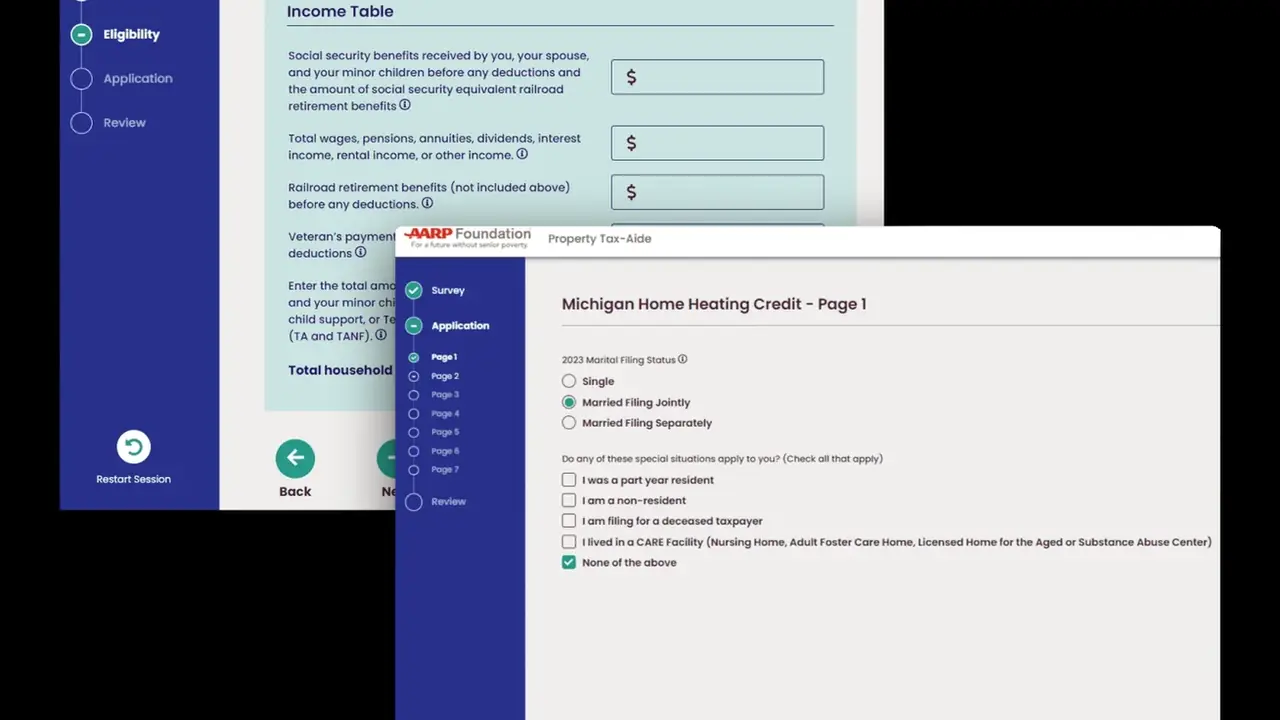
The AARP Foundation's property tax tools kept running for thousands of older adults because Gnar kept the existing tools in service while it stabilized them and rebuilt them in phases. The Foundation's Property Tax-Aide program helps low-income older adults stay in their homes by connecting them with property tax refund and credit programs in their state.
The AARP Foundation engagement started with a diagnosis. The tools had launched in 2019 with a different development partner, and by 2021 the program's team had concerns about quality and scalability. Gnar's audit of the existing codebase found no integrated testing, security vulnerabilities, no CI/CD pipeline, inconsistent front-end components, unnecessary UX complexity and interfaces that did not meet ADA accessibility requirements.
The audit made the call: replatforming would cost less and carry less risk than rebuilding on top of the existing codebase. The program could not go dark, because thousands of older adults relied on the tools every tax season.
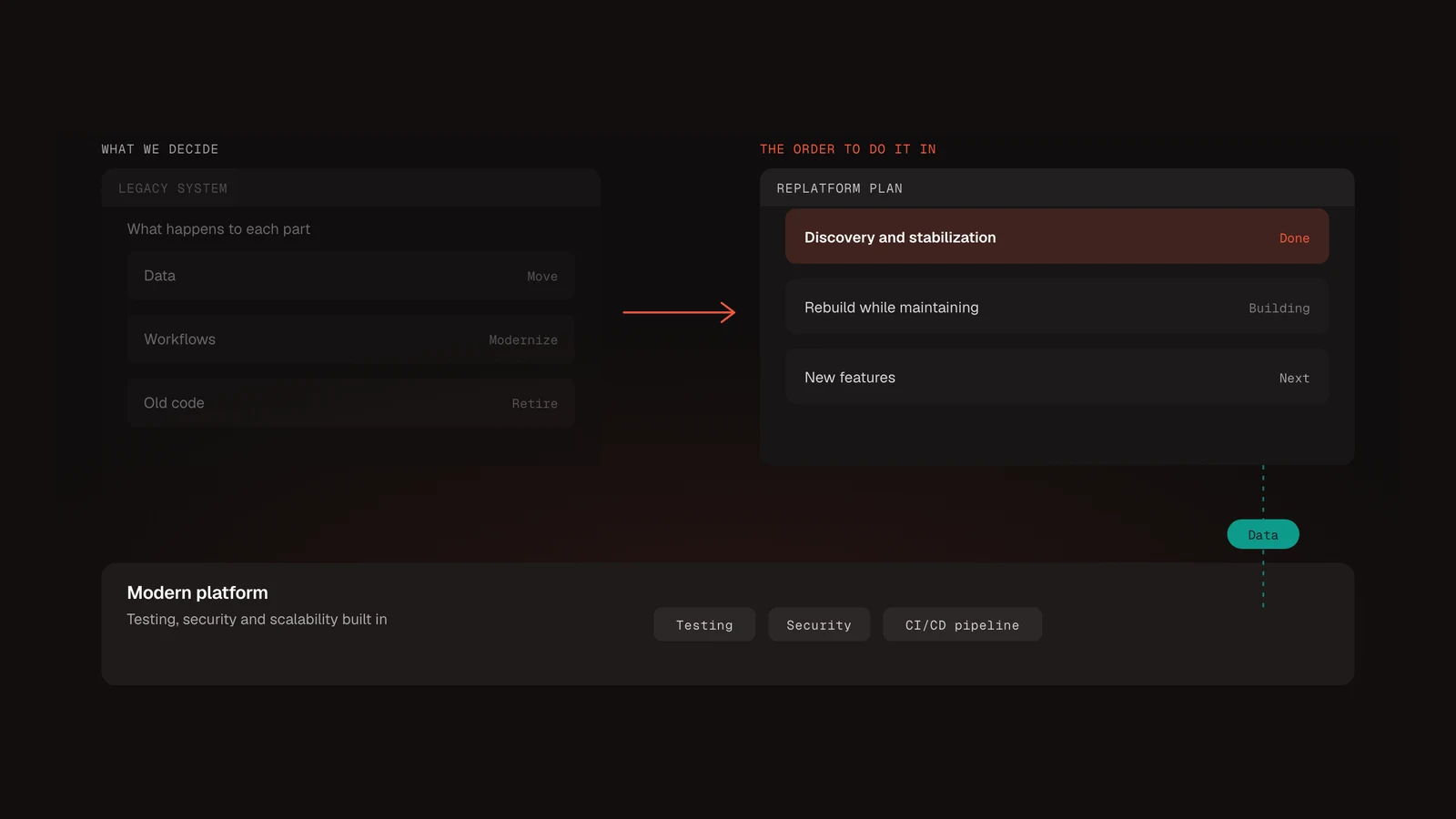
So the plan had three phases that kept the existing tools running. The first was a four-week discovery and stabilization, in which Gnar took ownership of the code from the previous firm and stabilized the current tools so they could be used securely. The second rebuilt 14 tools with testing, security and scalability built in from the first commit. The third added what the old platform could not support, including a redesigned flow that cut the clicks needed to complete an application by 40% on average.
A manufacturer or distributor can follow the same order: stabilize the system you have, rebuild behind it while it keeps running, then add what the old system could not do.
After the replatform, Gnar maintained and updated the tools for every later tax year and built new tools for more states. Gnar's case study reports that the program served more than 28,000 applicants and secured over $10M in property tax relief for older adults. Krystal Downie, the program's business operations manager, said Gnar's team "was highly organized and proactive, ensuring that all objectives were met on time and with excellence."