
At The Gnar, we're always reading, watching, and listening in order to keep our skills sharp and our perspectives fresh. Every month, we round up our learnings and publish them in a Gnarly Learnings blog post.
In November 2023, we learned about AI applications in medical writing, weather predictions, and marketing. We also added to our knowledge of design systems, discovered some interesting trends in Flutter development, and created an executive summary explaining the wonderful world of programming languages.
Where do the November 2023 picks stand today?#
Checked on November 12, 2026, most of these November 2023 links still load, and several picks have changed. Shopify's Remix app template points new projects to a React Router template. The Polaris React library is archived. GraphCast's code sits in a repository titled WeatherNext. The Zephyr browser demo is paused. Expo's office hours run on Discord.
The table below checks twelve of the picks against the source that owns it, three years on. It repeats the habit this post opens with: "At The Gnar, we're always reading, watching, and listening".
| Pick | What changed by November 12, 2026 | Where to look now |
|---|---|---|
| Sorcero | Still operating. Its site lists plain language summaries under Scientific Content Generation. | The same site |
| GraphCast | Its GitHub repository is titled WeatherNext and lists GraphCast as WeatherNext Graph. | WeatherNext 2, covered below |
| Alembic | The old address redirects to alembic.com, which calls itself an Enterprise Causal AI Platform. | The new address |
| Shopify Remix app template | Its README says Remix is now React Router and sends new projects to a React Router template. | The React Router template, covered below |
| Polaris | The Polaris React repository is archived. Shopify released Polaris Web Components on October 1, 2025. | Polaris Web Components, covered below |
| Octoverse | GitHub published three newer reports. The 2026 report came out October 28, 2026. | The 2026 report, covered below |
| htmx migration guide | Still live at htmx.org. | The same guide |
| scientist | The newest release on RubyGems is 1.6.5, from December 16, 2024. | The same gem |
| Zephyr 7b beta | The model card is still up under the MIT license. The Zephyr Chat Space shows "This Space has been paused." | The model card |
| Expo office hours | Expo's office hours page lists most Wednesdays at 12pm PT, live from Expo's Discord. | Expo's Discord |
| Object. | MDN marks it Baseline widely available, across browsers since March 2024. | The same method |
| Rails. | Still in the Troubleshooting section of the Rails autoloading guide. The newest Zeitwerk release on RubyGems is 2.8.3, from August 1, 2026. | The same call |
Business Applications of AI#
In a recent Stack Overflow podcast, CEO Dipanwita Das and CTO Hellmut Adolphs of Sorcero discussed how they're using generative AI to create better plain language summaries (PLSs), enabling medical affairs departments to provide more readable drug descriptions to doctors and patients.
[7:40] There are only less than 0.2% of the global population that can actually read a medical document…there's so many indices to measure readability. And this is a great, very, very appropriate space to apply generative AI…we've [created] a PLS generation workbench that supports the medical writer in writing PLSs that are faster and we can generate one in minutes. It's vastly cheaper and it's much higher quality. So we're finding that the PLSs that we're generating are 700% more readable than what's in the market.
The GraphCast AI model can outperform traditional meteorological predictions using a fraction of the computing power, as reported in the journal Science and summarized by the Financial Times.
GraphCast significantly outperforms the most accurate operational deterministic systems on 90% of 1380 verification targets, and its forecasts support better severe event prediction, including tropical cyclones tracking, atmospheric rivers, and extreme temperatures.
John Adams, co-founder and Chief Innovation Officer at Alembic, discussed in a recent episode of the Software Engineering Daily podcast how his company uses AI to tie together data from multiple marketing channels, provide better attribution, and improve individual user privacy.
What happened to GraphCast after November 2023?#
Google DeepMind followed GraphCast with newer weather models, including GenCast in December 2024 and WeatherNext 2 in November 2025. The European Centre for Medium-Range Weather Forecasts (ECMWF) put its own AI model into operations in February 2025. As of November 12, 2026, the GraphCast code lives in a GitHub repository titled WeatherNext.
- November 14, 2023, GraphCast: the Science paper says it beats the most accurate operational deterministic systems on 90% of 1,380 verification targets. It forecasts hundreds of weather variables for the next 10 days.
- December 4, 2024, GenCast: the Nature paper says GenCast generates an ensemble of stochastic 15-day global forecasts. It has greater skill than ENS, ECMWF's ensemble forecast, on 97.2% of 1,320 targets.
- February 25, 2025, AIFS: ECMWF took its Artificial Intelligence Forecasting System into operations. It runs side by side with the physics-based Integrated Forecasting System. The announcement says: "The AIFS is the first fully operational weather prediction open model using machine learning with the widest range of parameters."
- November 17, 2025, WeatherNext 2: Google's announcement says it surpasses the previous WeatherNext model on 99.9% of variables and lead times, out to 15 days. Its forecast data is in Earth Engine and BigQuery. It upgraded forecasts in Search, Gemini, Pixel Weather and Google Maps Platform's Weather API.
The WeatherNext repository lists GraphCast as WeatherNext Graph and GenCast as WeatherNext Gen, under its older models.
GenCast's forecasts are stochastic, so two runs can differ. The Gnar Company's post on AI evals makes a related point for software teams. "The short answer: evals are a natural extension of automated testing into a world where outputs are non-deterministic."
Ecommerce Web Design#
A separate post by Shopify Engineering discussed Remix and Admin apps, as well as a new template for building Shopify apps with Remix.
If you're interested in building admin applications, don't forget to check out Shopify's Polaris design system.
Should a new Shopify app still start from the Remix template?#
A new Shopify app should start from Shopify's React Router template, because the Remix template's README points new projects there. Remix and React Router merged in React Router v7. The React Router template was forked from the Remix template and converted to React Router. Shopify's upgrade guide says: "Support for the Remix package in its current state will be limited to critical security issues."
The Shopify Engineering post above, dated July 26, 2023, said: "Remix is now the recommended way to build Admin apps on Shopify." Remix announced on May 15, 2024 that its planned v3 would ship as React Router v7. React Router v7 reached its stable release on November 22, 2024. That release post says: "We encourage all Remix v2 users to upgrade to React Router v7."
For a new app, the React Router template's README gives this command: shopify app init --template=https://github.com/Shopify/shopify-app-template-react-router. For an existing Remix app, Shopify's upgrade guide lists these changes:
- Vite: an app created before February 21, 2024 may need to adopt Vite first.
- Auth: an embedded app should turn on the
unstable_newEmbeddedAuthStrategyflag before it moves. With the flag on, the app uses Shopify managed install, which uses token exchange. - REST: the React Router package drops REST. Move those calls to GraphQL, or use the REST client directly.
- Non-embedded apps: around 2% of Remix apps render in a separate tab or window. The React Router package drops support for them. Such an app can go embedded or stay on the Remix package.
- AppProxyForm: it is removed. Use a lowercase
<form>element. - Node: in the step that removes
installGlobals, the guide sets the package.json engines field to"node": ">=20.10".
Token exchange trades an App Bridge ID token for an access token. Shopify's ID token docs say ID tokens were previously called session tokens. The Gnar Company's Shopify session token post covers that token from the Rails side. It notes: "One of the requirements for newly submitted Shopify applications is that they use session token authentication with AppBridge2.0."
Design#
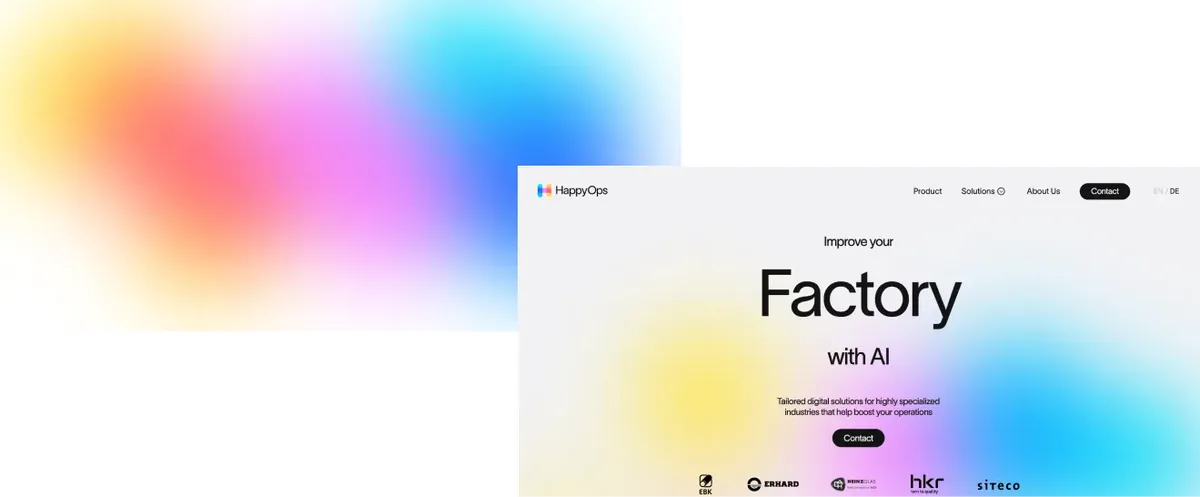
This month, we came across two sites (eventbeds and HappyOps) that beautifully incorporated their loading screens into their overall design.

Well-known design systems consultant Brad Frost guest starred in a recent episode of the Syntax podcast. He discussed the three parts of a design system (a design library, a code library, and the documentation that glues everything together) and why Web Components have become an integral part of his work over the last few years.
Why did Shopify move Polaris to web components?#
Shopify moved Polaris to web components so developers on more platforms can use it, according to the Polaris React README. Shopify released Polaris Web Components on October 1, 2025. The Polaris React library is deprecated, and its repository is archived and unmaintained. The new components work with every framework, plain JavaScript and server-rendered sites.
Three things moved between November 2023 and November 2026:
- Docs: in 2023, polaris.shopify.com. In 2026, that address redirects to shopify.dev, which calls Polaris Shopify's unified UI framework built on web components.
- Library: in 2023, Polaris React. In 2026, Polaris Web Components, which Shopify asks app developers to adopt for new development.
- App template: Shopify's upgrade guide says the React Router package uses App Bridge and Polaris Web Components, rather than Polaris React.
The Syntax episode above, dated October 20, 2023, covered using web components to build scalable front-end architecture. The Gnar Company's own design systems post also cites Brad Frost. It says: "When creating a design system one method that I like to reference is Brad Frost's Atomic Design." The same post lists the Shopify Design System Polaris among existing design systems that designers often use.
Mobile App Development#
GitHub's 2023 Octoverse report demonstrated that Flutter, the mobile app development framework from Google, was one of the largest open-source projects on their platform, as measured by its total number of contributors.
In the same report, Dart (the language used for building Flutter apps) also ranked just below the mobile app development language Kotlin in terms of usage across GitHub repositories.
How has Flutter fared in Octoverse since 2023?#
Flutter stayed in GitHub's top 10 projects by contributors in the 2024 Octoverse report. It dropped off that list in the 2025 report, where AI projects took six of the ten places. The 2025 report still names Flutter among the mobile projects popular with first-time contributors. The 2026 report does not mention Flutter.
| Octoverse report | Flutter in the top 10 by contributors? | Language ranking |
|---|---|---|
| 2023, November 8, 2023 | Yes, in the top 10 | Kotlin 12th and Dart 13th by usage |
| 2024, October 29, 2024 | Yes | Python overtook JavaScript as the most popular language |
| 2025, October 28, 2025 | No | TypeScript became the most used language in August 2025 |
| 2026, October 28, 2026 | Flutter is not mentioned | TypeScript first, Python second and JavaScript third by contributors |
As of November 12, 2026, the newest stable releases are Flutter 3.50.0, from November 11, 2026, and Dart 3.14.0, from November 4, 2026.
Octoverse ranks projects by the number of people who contribute to them, and its 2026 report ranks languages by contributors too. The Gnar Company's programming languages summary explains why that number matters. "And what they do well is generally dictated by the number of engineers actively working in that language and their interests."
Tech Insights#
What's a programming language anyway? Check out our programming languages executive summary to learn how we at The Gnar think about current and future languages.

Gnarly Bytes#
- Libraries: Rails developers interested in HTMX should take a look at the Hotwire / Turbo to HTMX migration guide.
- Libraries: We discovered scientist, a neat Ruby library for refactoring critical paths.
- Rails: If you're interested in Hotwire, check out the Hotwire cookbook from well-known Rails dev Yaroslav Shmarov.
- Rails:
Rails.autoloaders.log!makesZeitwerktell you what it's trying to load, from where, and what it's doing implicitly. - Artificial Intelligence: Zephyr 7b beta is a high-quality large language model (LLM) you can host locally (as of November 2026, the browser demo is paused: Zephyr Chat).
- React Native: Apparently, Expo has weekly open office hours!
- JavaScript:
Object.groupByis an interesting method that doesn't seem widely used. Here's an example from the Mozilla web docs:
const inventory = [
  { name: "asparagus", type: "vegetables", quantity: 5 },
  { name: "bananas", type: "fruit", quantity: 0 },
  { name: "goat", type: "meat", quantity: 23 },
  { name: "cherries", type: "fruit", quantity: 5 },
  { name: "fish", type: "meat", quantity: 22 },
];

const result = Object.groupBy(inventory, ({ type }) => type);

/* Result is:
{
  vegetables: [
    { name: 'asparagus', type: 'vegetables', quantity: 5 },
  ],
  fruit: [
    { name: "bananas", type: "fruit", quantity: 0 },
    { name: "cherries", type: "fruit", quantity: 5 }
  ],
  meat: [
    { name: "goat", type: "meat", quantity: 23 },
    { name: "fish", type: "meat", quantity: 22 }
  ]
}
*/Contributors#
Learn more about how The Gnar builds software.