What Is Agentic Development? A Guide for Technical Leaders
In 2025, many organizations are exploring how to use AI not just to assist users, but to act on their behalf. This shift introduces a new development model: agentic development.
For technical leaders researching the best agentic development company, understanding what agentic development actually is—and what it is not—is the first step. This guide provides a clear breakdown of key concepts, tools, and evaluation frameworks.
Definition: What Is Agentic Development?
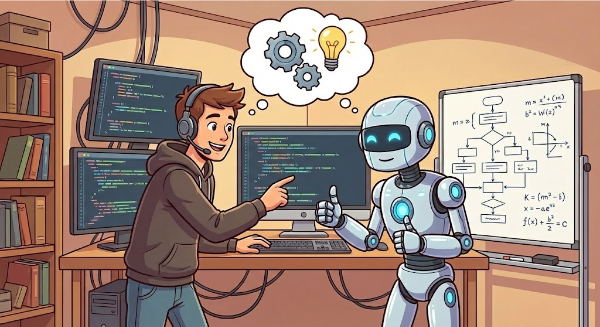
Agentic development is a software development approach where AI agents write significant portions of production code under human guidance. Unlike simple code suggestions, these agents create entire features, refactor existing code, and generate tests—all directed by experienced developers who maintain architectural control and quality standards.
The term "agentic" matters because these tools don't just suggest—they act. They make decisions about how to implement features based on your instructions and the existing codebase.
This approach changes how developers work. Instead of typing every line of code manually, developers become directors who guide the AI, review its work, and make the important architectural decisions.
How Does the Agentic Development Ecosystem Work?
Agentic development brings together four key components that work in concert.
AI Tools like Cursor, Claude Code, GitHub Copilot Workspace, and Augment Code write code based on specifications provided by the development team.
Required Expertise comes from senior developers and system architects who guide the AI, review its output, and make strategic decisions about system design.
Outputs include production-ready code, comprehensive test suites, and documentation—all deliverables that meet professional quality standards.
Quality Controls such as test-driven development, human code review, and automated testing ensure reliability and maintainability of the final product.
What Makes Agentic Development Different From Traditional AI Coding Tools?
How Does Agentic Development Compare to Autocomplete?
Traditional AI coding tools like the original GitHub Copilot would suggest the next line as you typed. Developers still wrote 80% of the code themselves.
With agentic development, the ratio flips. AI agents can write entire functions or features. Developers focus on reviewing, testing, and integrating this code rather than writing every line.
The key difference: Autocomplete helps you type faster. Agentic development helps you build faster.
How Does Agentic Development Compare to Vibe Coding?
"Vibe coding" happens when someone with limited technical knowledge prompts AI to generate code they don't fully understand. This might work for quick prototypes but creates problems for production software.
Agentic development requires technical expertise. Senior developers guide the AI with clear specifications, review the output, and ensure it meets quality standards.
The key distinction: Vibe coding relies on AI to compensate for lack of expertise. Agentic development uses AI to amplify existing expertise.
How Do These Approaches Compare?
Traditional coding means the developer writes 100% of the code, requires high technical expertise, and works for any project type.
Autocomplete tools like early Copilot mean developers write about 80% while AI suggests 20%, still require high technical expertise, and primarily help with faster typing.
Vibe coding means AI writes most of the code with human prompting, requires low technical expertise, and should only be used for quick prototypes.
Agentic development means AI writes 60-80% while humans direct and review, requires high technical expertise, and is designed for production software at scale.
What Tools Power Agentic Development?
Several tools have emerged to support this development approach, each with distinct strengths.
Cursor is built as an AI-first editor with deep Claude and GPT integration. It excels at full-feature development where developers need to build complete functionality from specifications.
Claude Code from Anthropic offers strong reasoning and code understanding capabilities. It works particularly well for complex logic and refactoring existing codebases.
GitHub Copilot Workspace has expanded beyond simple suggestions to support building entire features. Teams already working within the GitHub ecosystem find this integration particularly valuable.
Augment Code focuses on generating and modifying code across multiple files simultaneously. This makes it well-suited for large-scale changes that touch many parts of a codebase.
The Gnar Company uses Cursor as our primary tool for AI-assisted development, with GitHub Copilot for code reviews. We continuously evaluate new tools as they emerge to find the best fit for different project types.
The specific tool matters less than how teams integrate it into their workflow. The most effective teams combine AI agents with strong review processes, automated testing, and clear architectural guidelines.
What Results Does Agentic Development Deliver?
AI-powered software development delivers measurable improvements in productivity. At The Gnar, we've seen an average 42% increase in development speed across projects using agentic tools, with some tasks seeing improvements up to 70%.
Which Tasks Benefit Most From Agentic Development?
Certain types of work see the greatest acceleration from AI agents. Writing boilerplate code that follows established patterns becomes dramatically faster. Creating comprehensive test suites happens in a fraction of the traditional time. Generating documentation from code and specifications becomes nearly automatic. Implementing well-defined features with clear requirements moves from days to hours.
Which Tasks Still Require Human Expertise?
Not everything gets faster. Complex architectural decisions that affect long-term system health require human judgment and experience. User research and requirements gathering depend on human empathy and communication. Debugging novel problems that don't match established patterns needs creative human problem-solving. Strategic product decisions about what to build remain fundamentally human choices.
How Do You Maintain Quality at Higher Velocity?
The concern that faster development means lower quality is valid—but addressable. We maintain quality through three key practices.
First, test-driven development. We write tests before implementing features, ensuring that AI-generated code must pass clear acceptance criteria.
Second, human code review. AI-generated code gets reviewed at each step of a build plan. No code ships without human eyes on it.
Third, architectural oversight. Experienced developers make system-level decisions about structure, patterns, and technical direction.
This approach allows us to offer our standard 12-month bug-free warranty even on projects using agentic development. If we built it and something breaks, we fix it for free.
How Do You Evaluate an Agentic Development Partner?
When looking for the best agentic development company, use these five questions to separate marketing hype from real capability.
Step 1: Ask About Daily AI Tools
Ask potential partners: "What AI tools does your team use daily?"
Look for specific tools like Cursor or Claude Code. Be wary of vague claims about "AI-powered" processes without concrete details about which tools and how they're used.
Step 2: Understand Workflow Changes
Ask: "How has AI changed your development workflow?"
Teams truly using agentic development will describe concrete changes to how they plan, code, and review work. They should be able to explain what's different now compared to traditional development.
Step 3: Verify Code Review Process
Ask: "What's your code review process for AI-generated code?"
Every line of code should still be reviewed by humans, regardless of who or what wrote it. If a team treats AI-generated code as automatically trustworthy, that's a problem.
Step 4: Assess Quality Controls
Ask: "How do you maintain code quality at higher velocity?"
Look for mentions of testing frameworks, documentation practices, and quality controls. Speed without quality leads to technical debt and maintenance nightmares.
Step 5: Request Examples
Ask: "Can you show me examples of AI-assisted work?"
Request case studies or demonstrations of their agentic workflow in action. Experienced teams will have concrete examples to share.
What Red Flags Should You Watch For?
Be cautious if you encounter teams that only mention GitHub Copilot without deeper workflow changes. Watch out for partners with no clear process for reviewing AI-generated code. Be skeptical of junior-heavy teams claiming AI eliminates the need for experience. Walk away if they can't explain which tasks are handled by AI versus humans.
What Green Flags Indicate Real Experience?
Look for teams with specific tools and workflows they can demonstrate. Value partners with senior engineers who clearly articulate how they collaborate with AI. Prioritize companies that offer quality guarantees applying to all code regardless of origin. Respect teams that give honest assessments of AI's strengths and limitations.
Where Is Agentic Development Headed?
The tools powering agentic development evolve rapidly, with major updates every few months. This pace of change means the real advantage isn't in which specific tool a team uses today, but in how adaptable their process is to new capabilities.
Teams that invest in learning agentic workflows—rather than just specific tools—will maintain their edge as the technology evolves. This includes practices for prompt design, agent testing, and quality control that transfer between platforms.
How Is the Developer Role Evolving?
The developer's role continues to shift toward higher-level work.
Where developers traditionally focused on writing code line by line, they now focus on designing system architecture. Where manual testing consumed significant time, developers now write clear specifications for AI agents to implement. Where documentation was often an afterthought, developers now spend more time reviewing and integrating AI-generated code. Where routine implementation filled the workday, developers now focus on solving the complex problems AI can't handle.
This doesn't mean developers become obsolete—quite the opposite. Technical expertise becomes even more valuable as it's applied to more strategic work rather than routine coding tasks.
Is Agentic Development Right for Your Project?
Agentic development isn't the right choice for every project. The best approach depends on your specific needs.
When Does Agentic Development Make Sense?
Agentic development tends to work well when you're facing tight deadlines and need to move quickly. It excels when requirements are well-defined and you know what you want to build. It's effective when you're working within established patterns rather than exploring entirely new territory. It delivers best when you have access to senior engineers who can guide and review AI output. It works smoothly when you can maintain a long-term partnership for ongoing development and maintenance.
When Might Traditional Development Be Better?
Traditional development may be preferable when you have a flexible schedule without urgent deadlines. It often works better when requirements are fluid and exploratory, still being discovered through iteration. It's typically the right choice for novel or research-heavy problem spaces where patterns haven't been established. It can be valuable when your goal includes building junior team skills through hands-on coding experience. It may be necessary if you must hand off the codebase immediately without ongoing partnership.
How Do You Decide?
When evaluating options, consider starting with a focused conversation about your goals rather than jumping straight to technical approaches. Understanding what you're trying to achieve helps determine whether agentic development makes sense for your situation.
The Gnar Company offers free consultations to discuss whether an agentic approach fits your next project. We can review your requirements, timeline, and technical constraints to recommend the best path forward.
Contact us to start your custom software project or discuss your product development needs.
FAQs
How does agentic development handle bugs or vulnerabilities?
Agentic development includes comprehensive testing and human review to catch issues before deployment. The Gnar Company backs all projects with a 12-month bug-free warranty, meaning we fix any bugs at no cost, regardless of whether they came from human or AI-written code.
Can agentic development be used in highly regulated industries?
Yes, agentic development can work in regulated environments by incorporating compliance requirements into the development process and maintaining detailed audit trails. The Gnar has experience building compliant applications for organizations with strict regulatory requirements.
How does agentic development compare to offshore development?
Agentic development uses AI to handle routine tasks while experienced engineers focus on architecture and quality. Unlike offshore arrangements that often introduce communication delays and timezone challenges, a U.S.-based team using agentic methods can deliver faster results with cleaner handoffs.
What skills do developers need for effective agentic development?
Developers working with agentic AI need strong system design skills, clear specification writing, and thorough code review practices. The best partners already have these skills embedded in their team, allowing your internal developers to learn alongside experienced practitioners.
Key Takeaways
Agentic development is building software with AI agents that write entire features under human guidance. It requires senior developers to direct AI, review outputs, and maintain quality. The Gnar Company uses tools like Cursor and Claude Code to deliver a 42% average speed increase while maintaining our 12-month bug-free warranty.

Mike is Co-Founder of The Gnar Company, a Boston-based software development agency where he leads project delivery for clients like Whoop, Kolide (acquired by 1Password), LevelUp (acquired by GrubHub), Qeepsake (feaured on Shark Tank), and AARP. With over a decade of experience building impactful software solutions for startups, SMBs, and enterprise clients, Mike brings an unconventional perspective having transitioned from professional lacrosse to software engineering, applying an athlete's mindset of obsessive preparation and relentless iteration to every project. As AI reshapes software development, Mike has become a leading practitioner of agentic development, leveraging the latest AI-assisted practices to deliver high-quality, production-ready code in a fraction of the time traditionally required.